
Last updated November 24, 2026
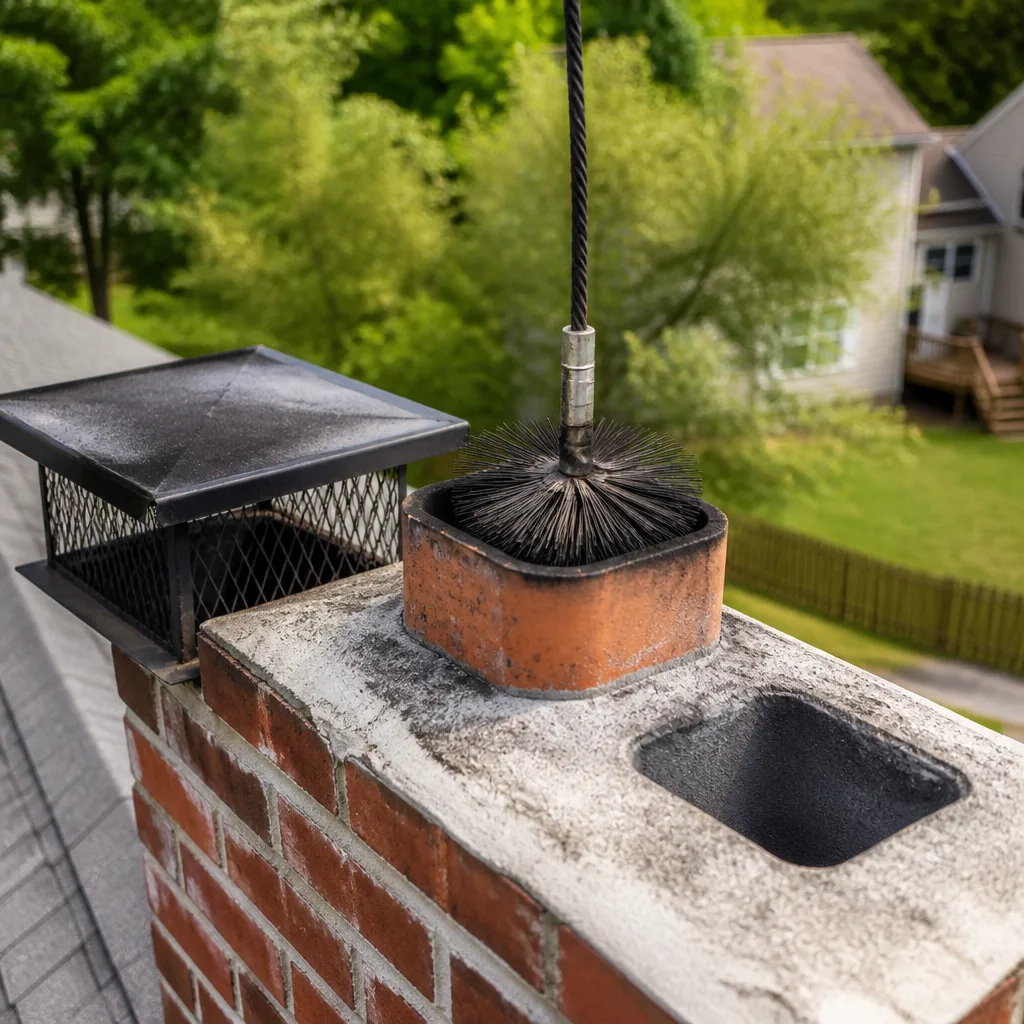 Sweep & inspection
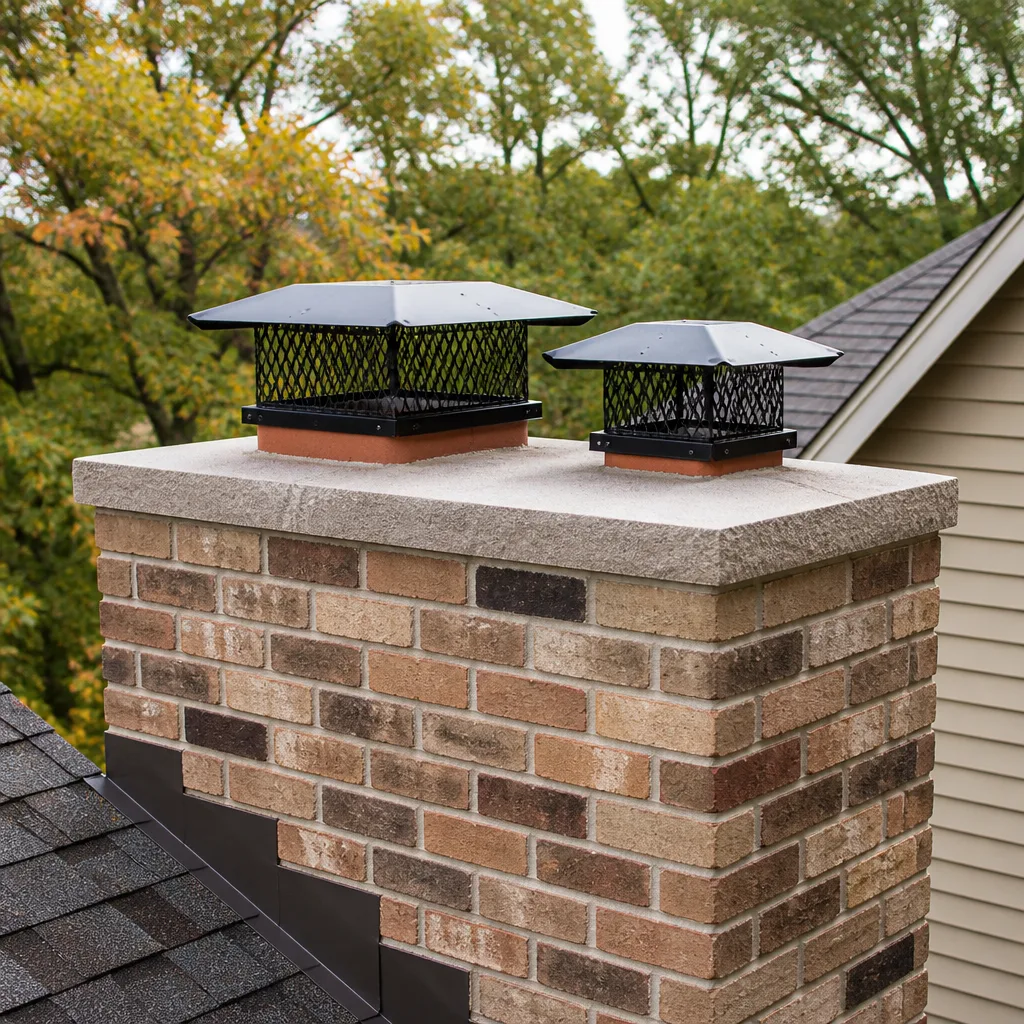 Caps & crowns
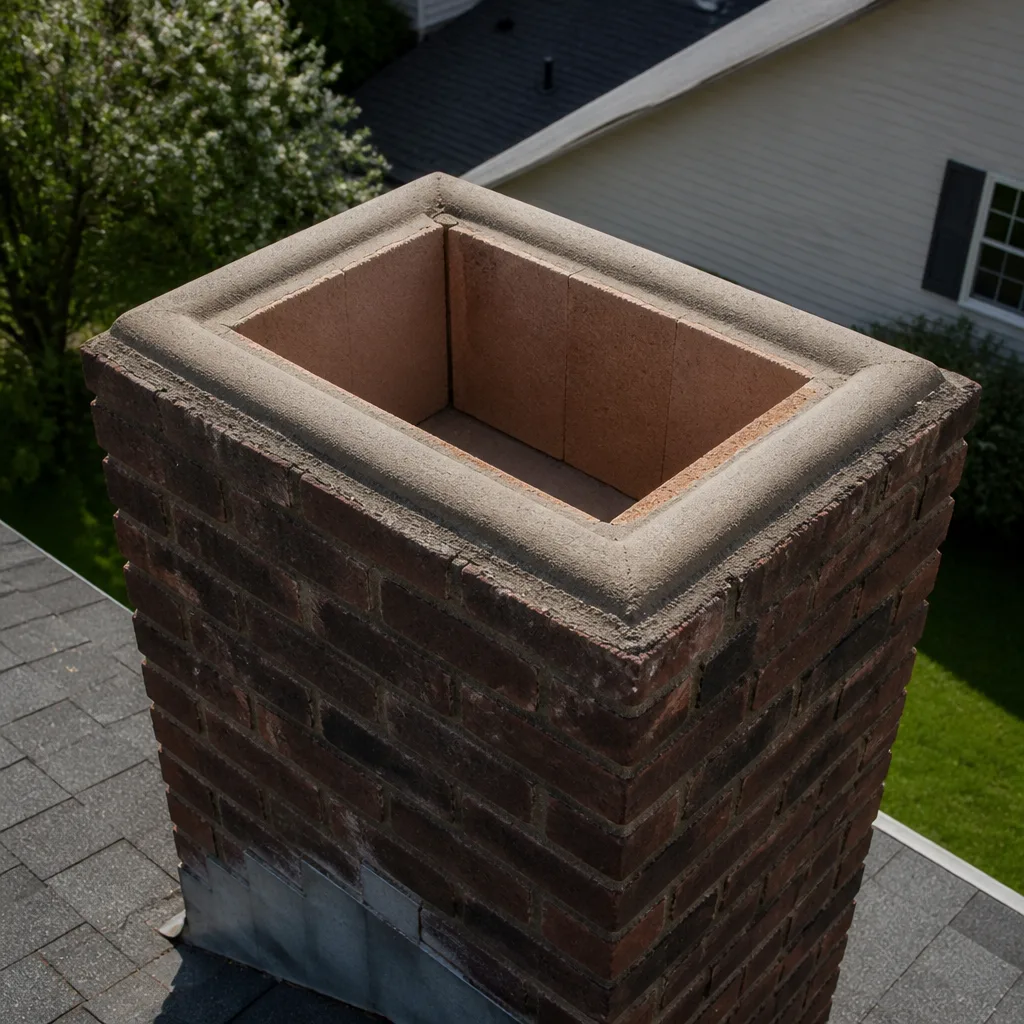 Flue relining
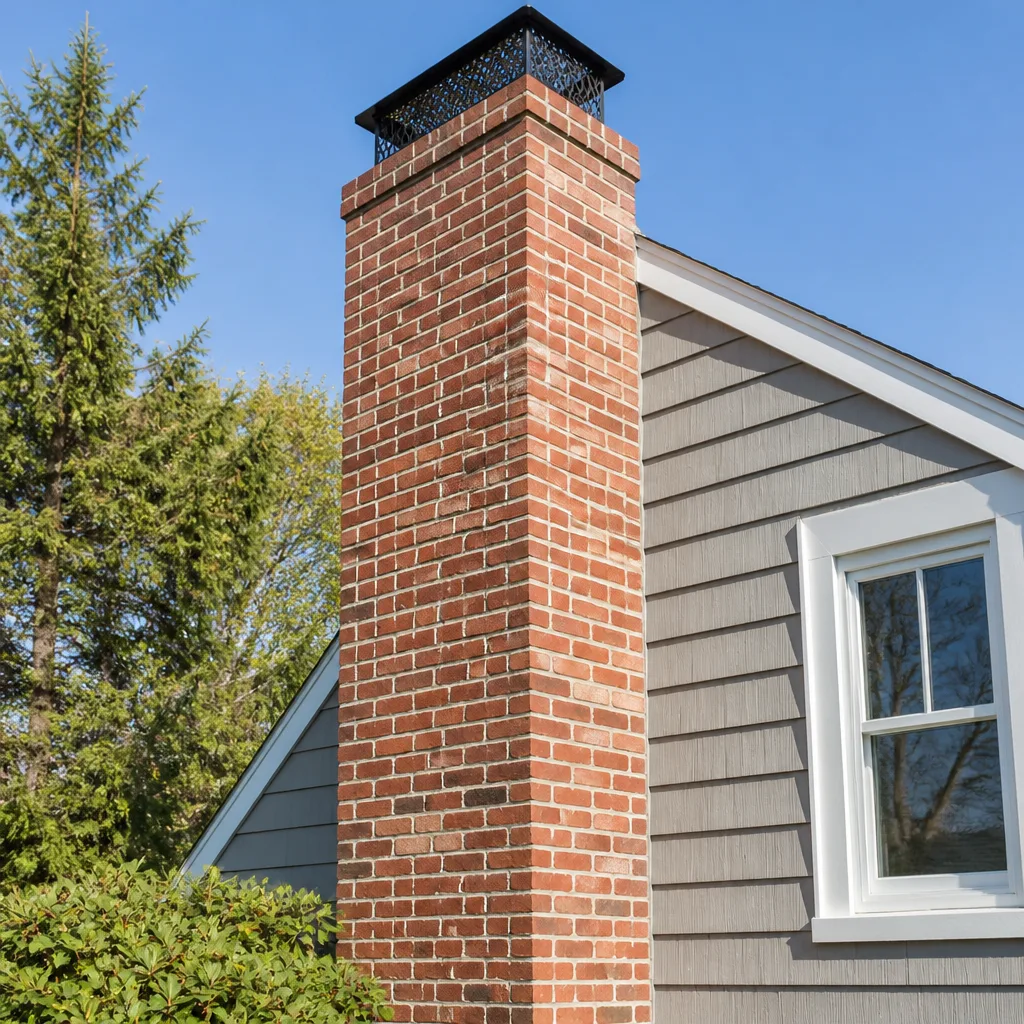 Masonry repair
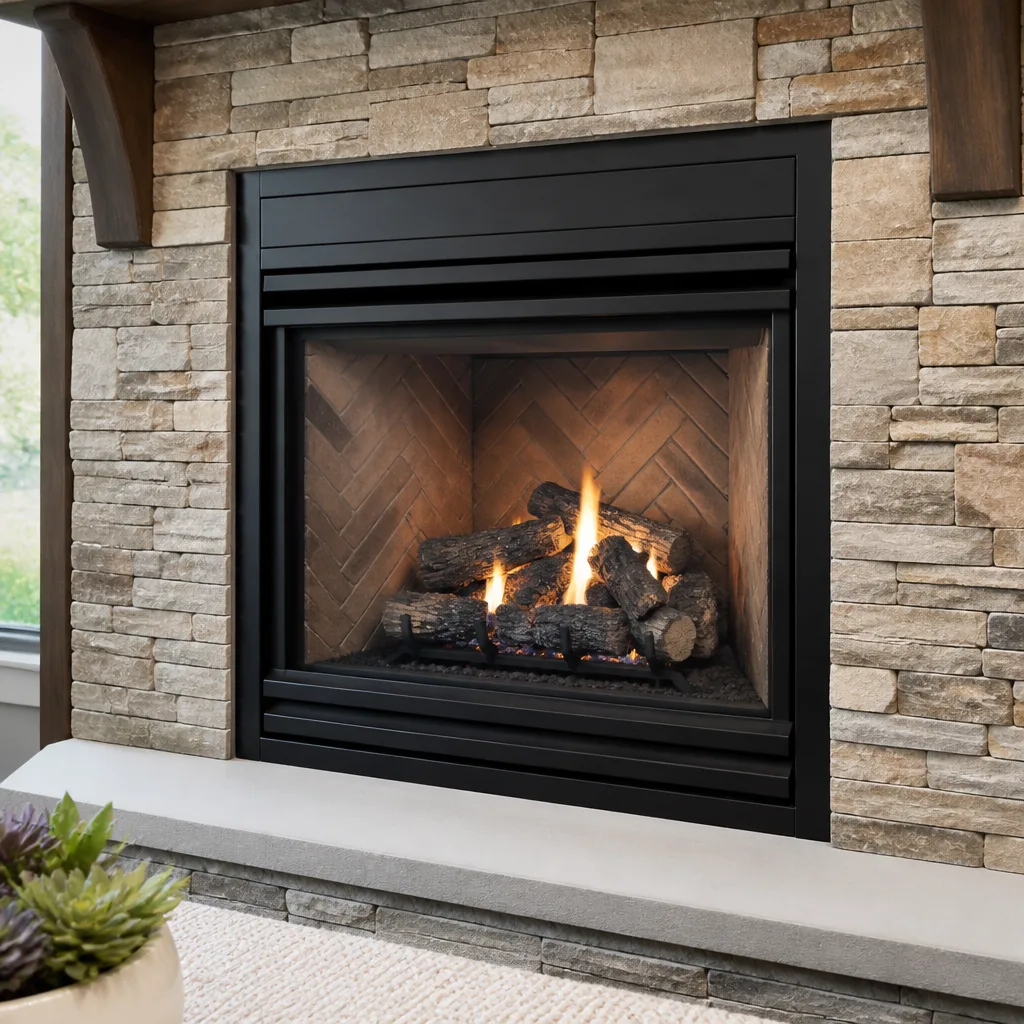 Gas fireplace service
Level 1 sweep and inspection to the NFPA 211 annual standard - flue, crown, cap, and flashing checked and photographed
Chimney sweep logs do not sweep chimneys. They loosen some creosote - which then falls where a brush and vacuum still have to collect it.
The Complete Guide to Chimney Cleaning in Lafayette
Most people picture chimney cleaning as one thing: a brush pushed down a flue. That picture is incomplete, and the gap between it and a real cleaning is where house fires and carbon monoxide problems begin. A chimney is a system of seven separate components, and each one collects a different kind of trouble. Brush the flue and ignore the smoke chamber, and you’ve cleaned the pipe while leaving the hazard. This guide maps the whole system so you know exactly what a thorough job looks like in Lafayette before anyone arrives at your door, what our high-altitude burn patterns do to creosote, and how to tell a genuine cleaning from a quick flue swipe.
Quick Answer
Chimney cleaning in Lafayette means servicing all seven components of the system, not just the flue: firebox, smoke shelf, damper, flue liner, smoke chamber, crown, and cap. A complete cleaning plus a Level 1 or Level 2 inspection removes creosote and glaze, confirms the liner and crown are sound, and catches the freeze-thaw damage that Lafayette’s clay soil and cold winters drive into masonry. The NFPA cites failure to clean as the leading contributing factor in chimney fires, and “clean” only counts when every component is addressed.
Styles & brands we work with
- Sweep & inspection
- Caps & crowns
- Flue relining
- Masonry repair
- Gas fireplace service
Table of Contents
- The Seven Components of a Chimney System
- Why “Cleaning” Means Different Things to Different Contractors
- Creosote and High-Altitude Burn Patterns in Colorado
- How Lafayette’s Clay Soil and Freeze-Thaw Cycle Damage Chimneys
- Level 1, Level 2, and Level 3 Inspections Explained
- Professional-Grade Sweeping Tools vs. Consumer Equipment
- What a Complete Cleaning Looks Like, Step by Step
- How Often Should You Schedule Cleaning?
The Seven Components of a Chimney System
A chimney is not a tube. It’s an engineered assembly, and every part has a job. When we talk about a complete cleaning in Lafayette, we mean all seven components get attention, because each fails in its own way.
- Firebox: The chamber where the fire burns. Cleaning means removing ash, soot, and creosote from the walls and floor, and checking the firebrick and mortar joints for cracks that let heat reach the structure behind.
- Smoke shelf: The ledge just above the firebox that redirects smoke back up the flue. Soot and debris pile up here and choke the draft. It gets scraped and vacuumed.
- Damper: The metal plate that controls airflow. It has to open, close, and seal. A warped or rusted damper wastes heat and can leave the flue open to weather and animals.
- Flue liner: The inner wall that contains combustion gases. Cleaning removes creosote from its surface, and inspection checks for cracks, gaps, and deterioration.
- Smoke chamber: The sloped area above the damper that funnels smoke into the flue. Its corrugated shape traps creosote in the ridges. This is the component most often skipped, and it’s a common origin point for chimney fires.
- Crown: The concrete cap at the top that sheds water away from the masonry. Cleaning includes inspecting it for cracks and spalling.
- Cap: The hood over the flue opening that keeps out rain, birds, and debris while letting smoke escape. It gets checked for blockage and proper fit.
When we handle the chimney sweep for a Lafayette home, all seven get addressed, because cleaning the flue alone leaves the smoke chamber and crown untouched, and those are exactly where slow damage hides.
Why “Cleaning” Means Different Things to Different Contractors
Ask three contractors what a chimney cleaning includes and you may get three answers. That’s not a small problem. A flue brush alone doesn’t make a chimney safe, because the flue is only one of seven components and the creosote that causes fires often collects above and below it.
In our experience, the difference shows up in the details:
- A flue-only sweep leaves the smoke chamber ridges loaded with creosote, and that’s where a hot ember can ignite it.
- Without a camera inspection, a cracked liner or a spalled crown goes unnoticed until it causes a bigger problem.
- Consumer-grade brushes and shop vacuums stir soot into the air instead of containing it, so the house smells like a fireplace for days.
- Skipping the damper and smoke shelf check means airflow problems that make the next fire burn poorly and produce more creosote.
When the inspector and the repair contractor are different companies, you also get a built-in conflict of interest. One party finds the problem, another party profits from fixing it, and you’re left taking both on faith. We do inspection and repair as the same team, so the person who tells you the liner is damaged is the same person who stands behind the repair. That unified accountability is the reason we perform inspections ourselves. If you also need chimney repair after a cleaning, it doesn’t get handed to a stranger.
Creosote and High-Altitude Burn Patterns in Colorado
Creosote is the tar-like residue left when wood smoke cools before it leaves the flue. It forms in three stages: a light soot you can brush away, a flaky crust that hardens, and a glazed, tar-like coating that bonds to the liner and won’t come off with a brush. Glazed creosote is the dangerous kind, and Colorado’s high-altitude burn patterns make it more likely.
At altitude, fires tend to burn less efficiently because there’s less oxygen per cubic foot of air. A fire that’s starved for oxygen smolders, and smoldering wood produces far more creosote than a hot, clean burn. Damp or unseasoned wood makes it worse. So does a flue that’s too cold, or a fire that’s allowed to burn low and slow overnight. Those are the conditions that build glaze instead of ash.
What we look for on a Lafayette chimney after a heating season:
- Glaze on the liner walls, especially near the top where gases cool fastest
- Heavy buildup in the smoke chamber ridges
- A strong creosote smell even between fires
- Visible soot at the damper, which signals restricted draft
Burning dry, seasoned wood and keeping fires hot helps, but it doesn’t eliminate creosote. It only reduces how fast it accumulates. That’s why the NFPA points to failure to clean as the leading cause of chimney fires, and why a yearly cleaning matters even for a careful burner. When a liner is glazed or damaged, we don’t default to replacement. HeatShield resurfacing can restore a damaged flue at a fraction of full relining cost, which matters when the alternative is a DuraFlex liner replacement estimate.
How Lafayette’s Clay Soil and Freeze-Thaw Cycle Damage Chimneys
Lafayette sits on expansive clay soil, and that’s not just a foundation issue. The clay swells when it absorbs moisture and shrinks as it dries. That movement shows up at the base of the chimney, where shifting soil can crack the masonry and open joints. Add the Front Range freeze-thaw cycle, where water works into a crack during a warm afternoon and freezes solid that night, and you get a slow, repeating expansion that widens every crack it touches.
The crown is the first line of defense, and it takes the most abuse. It’s the concrete slab at the top of the chimney, and when it cracks, water gets behind it and into the masonry below. Over a winter or two, that water freezes, expands, and spalls the brick and mortar. The result is a chimney that’s structurally weaker at the top than it should be, and a flue that’s more likely to have gaps at the joints.
Between cleanings, worth a look from the ground:
- Cracks or crumbling at the crown
- White staining on the brick, which can signal water working through
- Mortar joints that look recessed or sandy
- A cap that’s loose, missing, or clogged
This is why our cap and crown work is preventive, not just reactive. Capping and crowning a chimney keeps water and debris out in the first place, which slows the freeze-thaw damage Lafayette masonry faces every year. If you need fireplace repair as well, we can address both during the same visit instead of sending you to a second contractor.
Level 1, Level 2, and Level 3 Inspections Explained
The NFPA 211 standard defines three inspection levels, and the right one depends on what’s changed since the last inspection. Here’s how they differ:
- Level 1: A visual check of the readily accessible parts of the system, the firebox, damper, smoke chamber, and visible flue, done without special tools. This is the standard annual inspection when you’ve had no changes: same fuel, same appliance, no known problems.
- Level 2: Adds a camera inspection of the flue interior and accessible parts of the chimney. It applies when you’ve changed fuel types, installed a new appliance or liner, bought or sold the home, or had a chimney fire. This is the level that catches cracked liners and gaps that a visual check misses.
- Level 3: Involves opening walls or removing parts of the chimney to access concealed areas. It applies when a Level 2 finds a problem that can’t be diagnosed or repaired without access, and it’s the rare case, not the routine one.
Most Lafayette homes get a Level 1 with their annual cleaning, and a Level 2 when something has changed. A camera inspection and photo report stay with you, so you can see what we see and make your own decision about repair. Nothing gets recommended without that evidence, and we’ll tell you plainly when work can safely wait.
Professional-Grade Sweeping Tools vs. Consumer Equipment
The brush you buy at a hardware store and the tools a professional uses do different jobs, and the difference shows up in your air quality after the work is done. Professional sweeping uses purpose-built rods, brushes sized to the flue, and high-powered HEPA vacuums that pull soot into a sealed container instead of into your living room. Consumer equipment stirs dust into the air, and that fine soot settles across everything for days.
Materials matter too. We specify professional-grade industry brands, not anonymous big-box stock:
- DuraFlex liner systems for relining work
- HeatShield for flue resurfacing and restoration
- Copperfield and Famco for the caps and components that finish the job
These are the products the trade relies on, chosen for how they hold up to creosote, heat, and Colorado weather, not for how cheaply they can be sourced. When a cap or crown gets installed, it’s the real component, not a cut-rate substitute that fails in a few seasons.
What a Complete Cleaning Looks Like, Step by Step
A thorough cleaning follows a sequence, and knowing it helps you judge whether the job was complete. Here’s how a typical cleaning proceeds:
- Lay drop cloths and set up the HEPA vacuum to contain soot and dust before any tool goes in.
- Inspect the firebox, damper, and smoke shelf for damage and buildup, and clear the ash.
- Brush the flue with the right size brush, working the full length from the top down or bottom up as access allows.
- Scrape and clean the smoke chamber ridges where creosote collects above the damper.
- Run a camera inspection of the flue interior, checking for cracks, gaps, and glaze.
- Vegetate the crown and cap from the top, checking for cracks, spalling, and blockage.
- Vacuum the firebox and surrounding area, then walk you through what was found with photos.
Every cleaning includes a camera inspection and photo report, so you see the same evidence the technician does. Nothing gets recommended that you can’t verify for yourself, and if the system is sound, we say so and tell you to call back next season. Our technicians have up to 10 years of experience, which is the kind of tenure that shows up in how cleanly a smoke chamber gets finished.
How Often Should You Schedule Cleaning?
The general rule is once a year, and the NFPA supports annual inspection for the typical home. But the right frequency depends on how much you burn, what you burn, and how the fire behaves. A household that uses the fireplace regularly through a Colorado winter, with the high-altitude smoldering that produces creosote, should plan on a yearly cleaning. If you burn damp wood or run overnight fires, it may need more attention.
Call for a cleaning sooner if you notice:
- A strong creosote or soot smell between fires
- Smoke coming back into the room when you start a fire
- Visible glaze or heavy buildup on the liner
- Water staining or a cracked crown after a hard winter
Before burning season is the natural time to book, so the system is clean and inspected before the first cold night. It’s a better plan than discovering a clogged flue in January when the house is cold and the chimney is blocked.
Common Mistakes to Avoid
- Treating the flue as the whole job. A flue-only sweep leaves the smoke chamber and crown untouched, and those are where slow damage hides. A complete cleaning covers all seven components.
- Skipping the camera inspection. Without it, a cracked liner or a hidden gap goes unnoticed. A Level 2 inspection with a camera is how you catch what the eye can’t.
- Assuming a cleaning means a safe chimney. Cleaning removes creosote, but a cracked crown or failing liner still needs repair. Cleaning and inspection go together, and one without the other leaves a gap.
- Burning damp or unseasoned wood. Colorado’s high-altitude burn patterns already push toward smoldering, and wet wood makes it worse, building glazed creosote that’s harder to remove.
- Ignoring the crown between cleanings. Freeze-thaw cycles work on Lafayette masonry all winter, and a small crown crack becomes a spalled crown in a season or two.
- Letting the inspector and repair contractor be different companies. It creates a conflict of interest, and it leaves you taking both parties on faith. Unified accountability is why we inspect and repair as one team.
- Waiting for a problem to show up. By the time smoke backs up or creosote smells strong, the system has been building a problem for months. Annual cleaning is the cheaper path.
See the difference
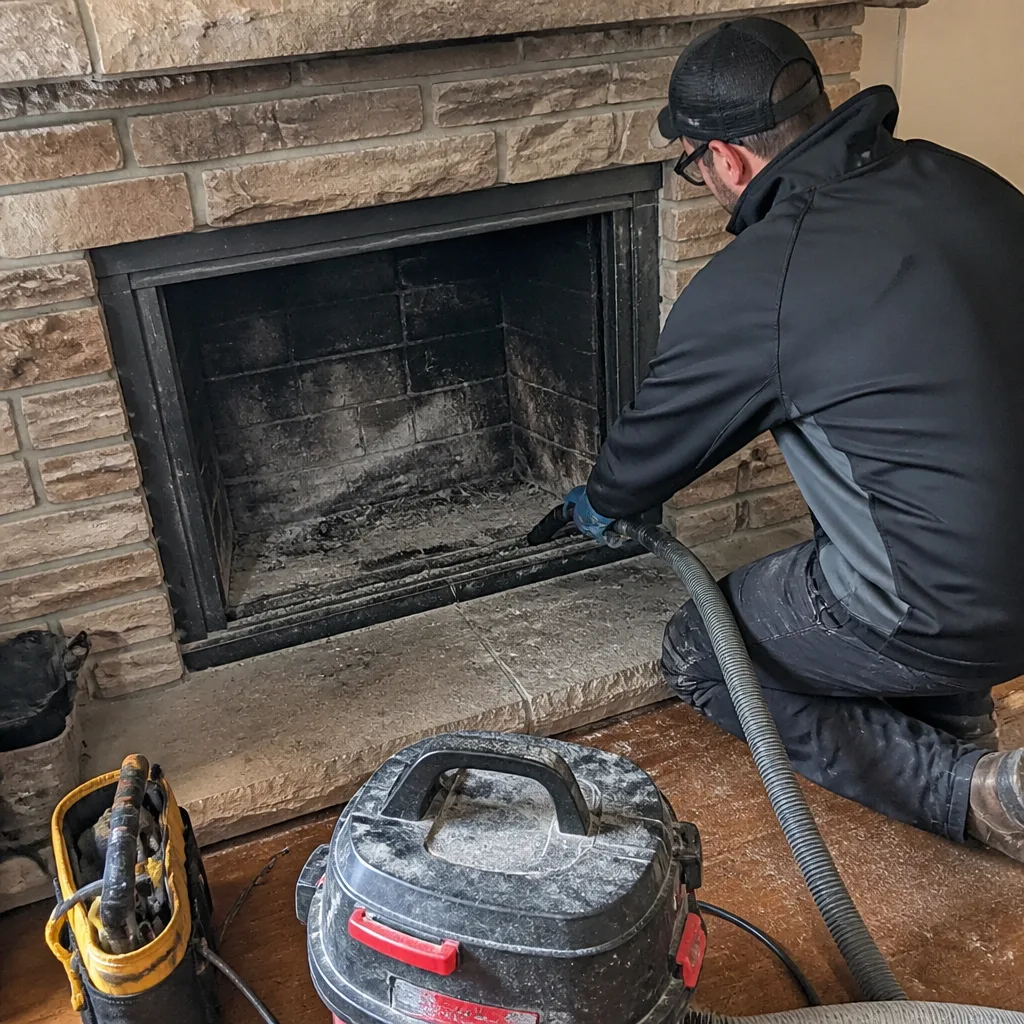 Before
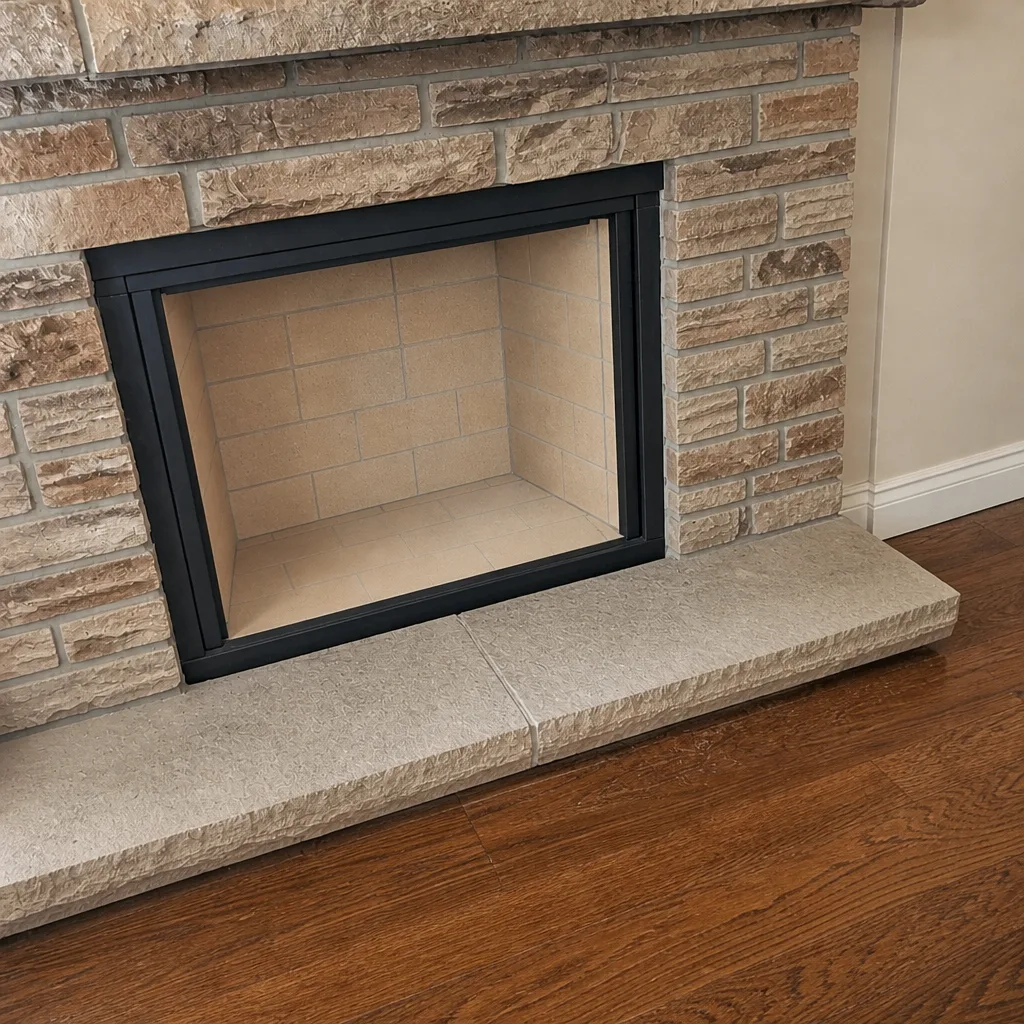 After
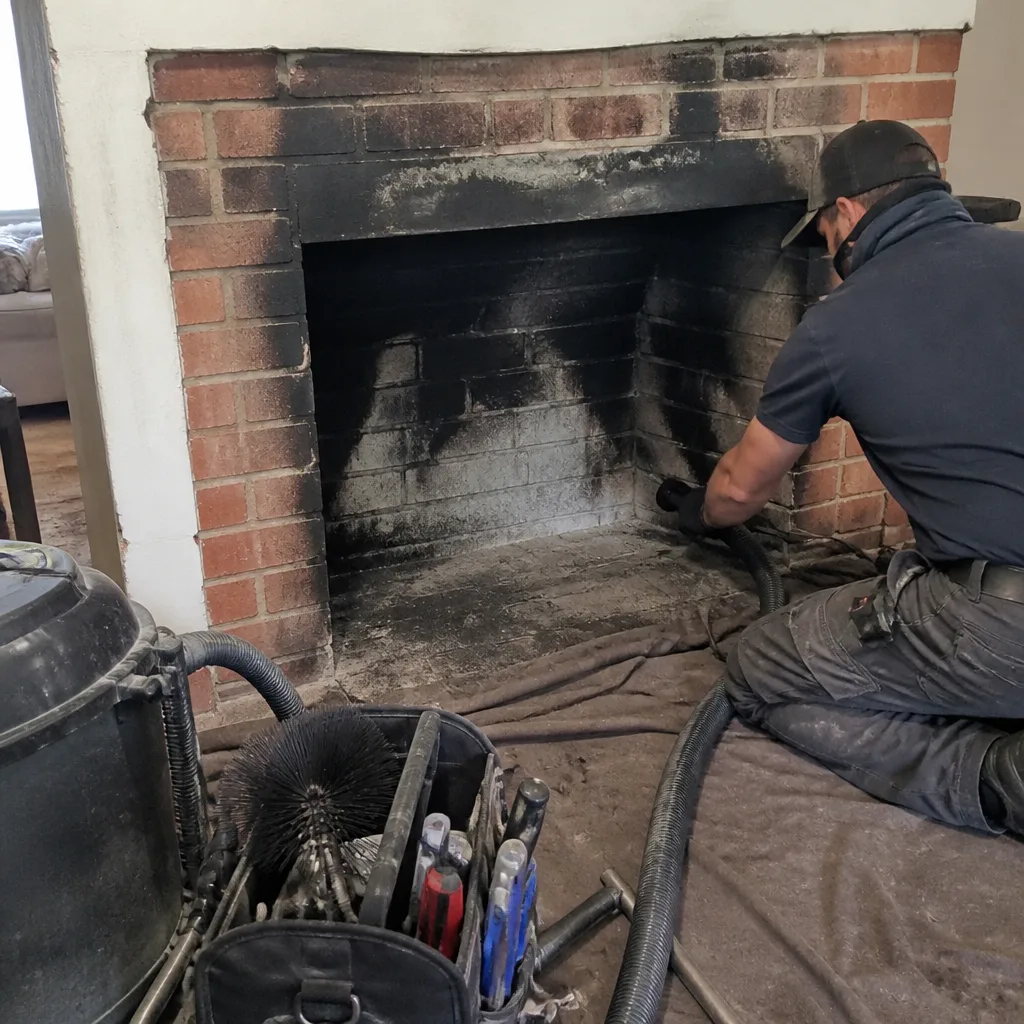 Before
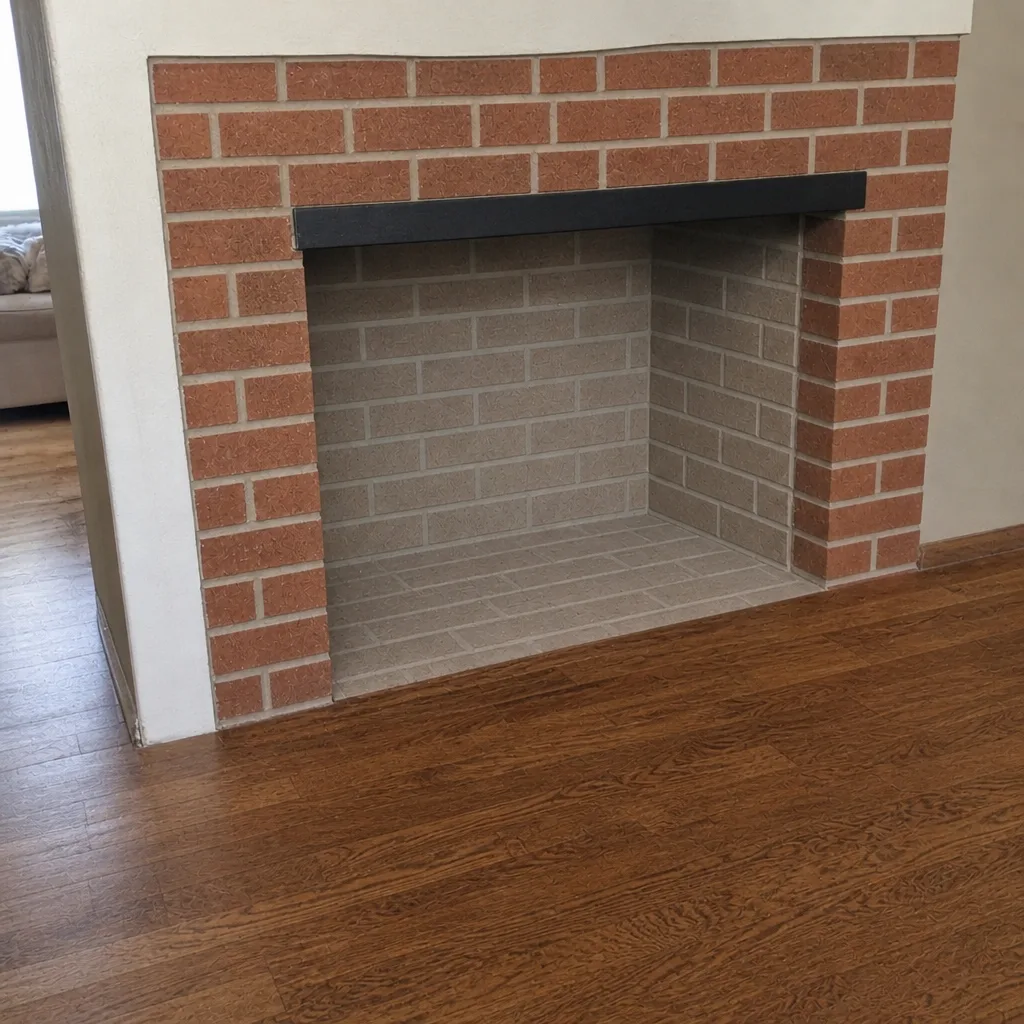 After
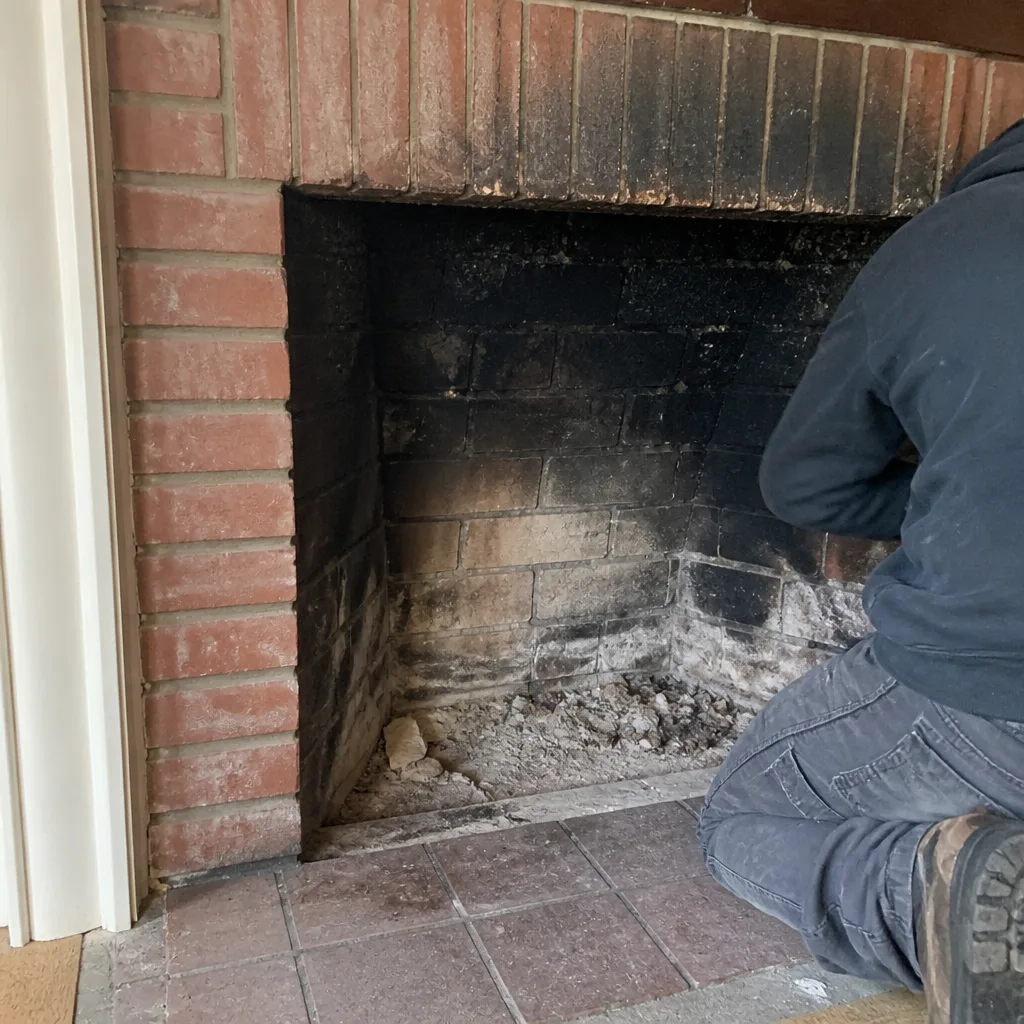 Before
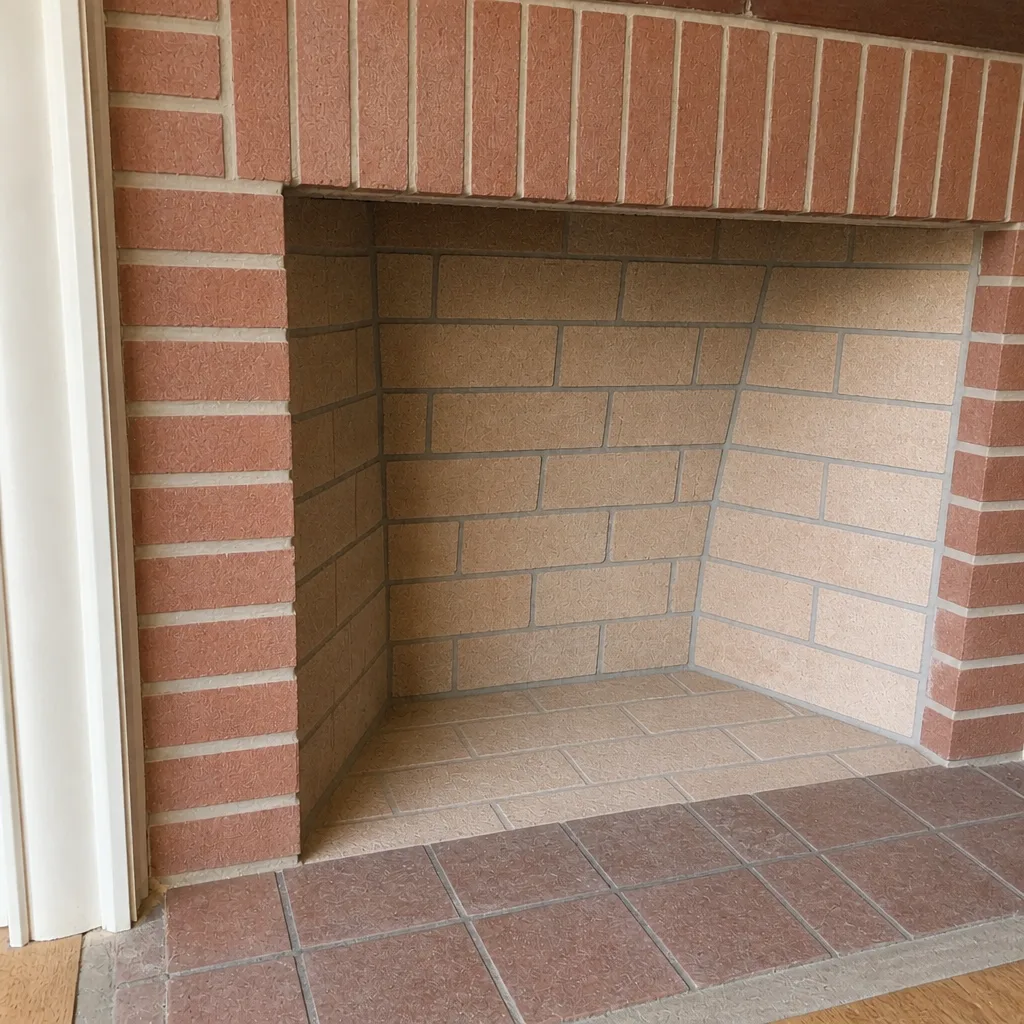 After
When to Call a Professional
Some chimney issues can be checked from the ground, but a glazed liner, a cracked crown, and a blocked smoke chamber need a trained eye and proper tools. Call a professional if you’ve had a chimney fire (even a small one), if smoke backs up when you light a fire, if you smell creosote between burns, or if you’ve moved into a new home and don’t know when the chimney was last cleaned. A Level 2 camera inspection is the way to establish a baseline. Don’t put off a system that shows water staining or a failing cap, because Lafayette’s freeze-thaw winters speed up deterioration. Lafayette Chimney Sweep offers free estimates in Lafayette. Call (844) 272-3731. We answer 24/7. Fast dispatch from 7am to 7pm, Sunday through Friday.
Frequently Asked Questions
A basic cleaning in Lafayette typically runs in the range of a standard service call, and the written estimate sets the exact price for your job. A cleaning plus a Level 2 camera inspection costs more than a flue-only sweep because it covers all seven components, but it’s the difference between a brushed pipe and a safe chimney. Call (844) 272-3731 for an exact quote. Estimates are free.
Not always. A damaged liner can sometimes be restored with HeatShield resurfacing instead of replaced with a full DuraFlex reline, and that saves a significant amount of money. The catch is that restoration only works when the damage is within its limits, which is why a camera inspection comes first. You see the evidence, and we tell you honestly whether repair or replacement is the right call. Call (844) 272-3731 to book an inspection.
Once a year for most homes, and the NFPA supports annual inspection. Lafayette’s high-altitude smoldering produces more creosote than a low-altitude burn, and regular fireplace use through a Colorado winter builds glaze faster. Call (844) 272-3731 to get on the schedule before burning season.
Creosote accumulates, and glazed creosote can ignite and start a chimney fire, which is why failure to clean is the leading contributing factor in chimney fires. A blocked flue can also push carbon monoxide back into the house. Skipping the cleaning doesn’t remove the hazard, it just delays the discovery. Call (844) 272-3731 for a free estimate.
The full cleaning is what makes the chimney safe. A flue brush leaves the smoke chamber, crown, and cap uninspected, and those are exactly where water damage and hidden creosote start in a Lafayette home. A complete cleaning covers firebox, smoke shelf, damper, flue liner, smoke chamber, crown, and cap. Call (844) 272-3731 to book one.
Most Lafayette homes need a Level 1 with their annual cleaning, and a Level 2 when something has changed, such as a new appliance, a fuel change, or a home purchase. Level 3 is the rare case that requires opening walls to access concealed areas. A camera inspection and photo report come with the work, so you can see what we see. Call (844) 272-3731 for details.
The Bottom Line
Chimney cleaning in Lafayette is a seven-component job, not a flue brush. The firebox, smoke shelf, damper, liner, smoke chamber, crown, and cap each collect their own kind of trouble, and skipping any one of them is where fires and carbon monoxide problems start. Add the high-altitude smoldering that builds glazed creosote and the freeze-thaw winters that crack Lafayette masonry, and annual cleaning plus a camera inspection becomes the sensible baseline. What matters most is that the person who inspects is the person who repairs, so you can trust the recommendation. Book Lafayette Chimney Sweep for a full-system cleaning and a free estimate.
Call (844) 272-3731. We answer 24/7. Fast dispatch from 7am to 7pm, Sunday through Friday.
Written by the team at Lafayette Chimney Sweep.