
Last updated November 24, 2026
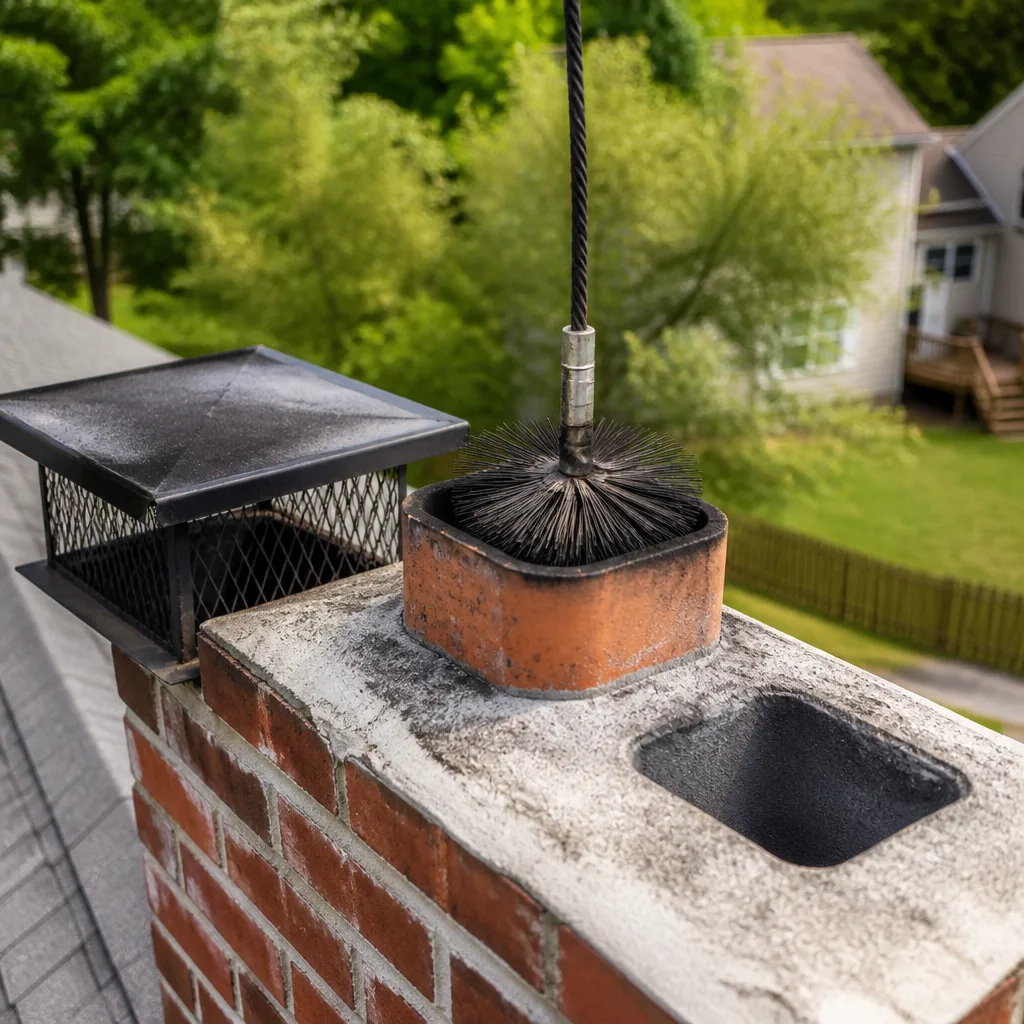 Sweep & inspection
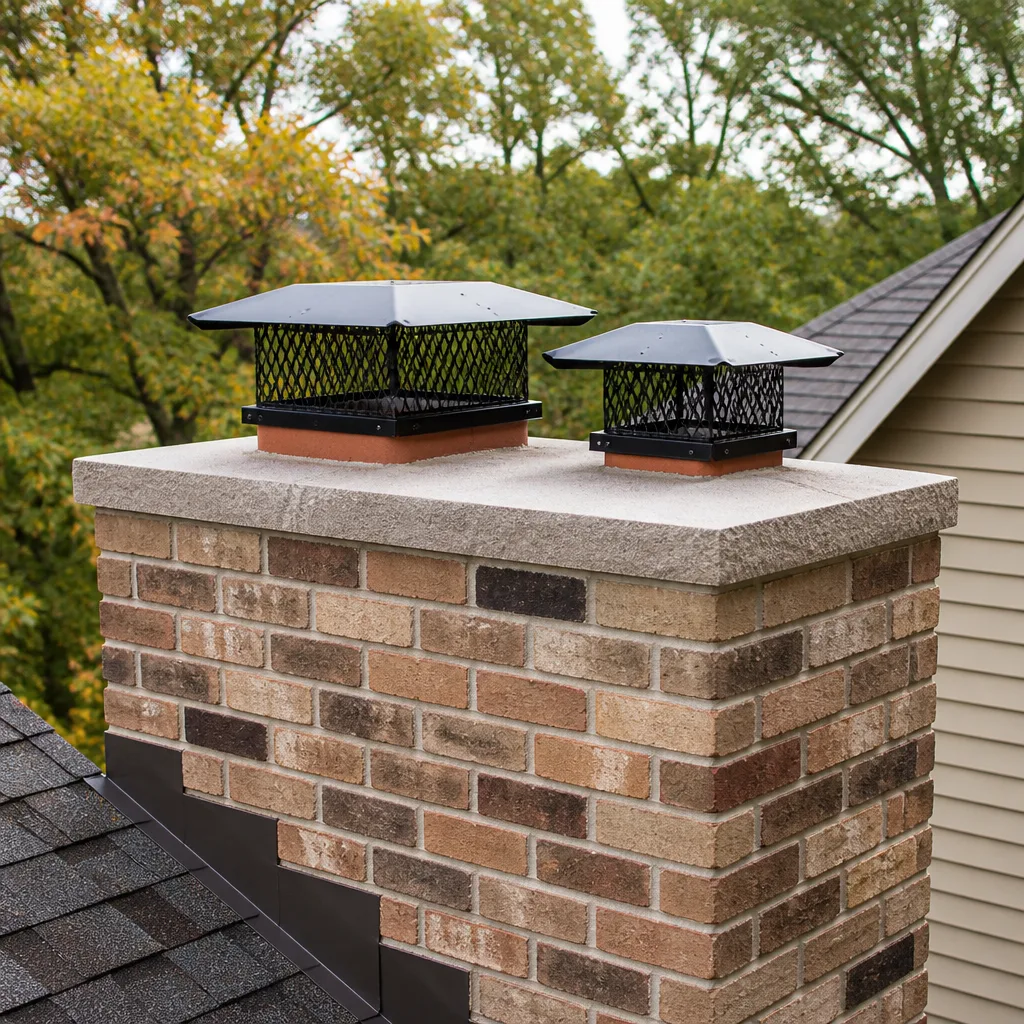 Caps & crowns
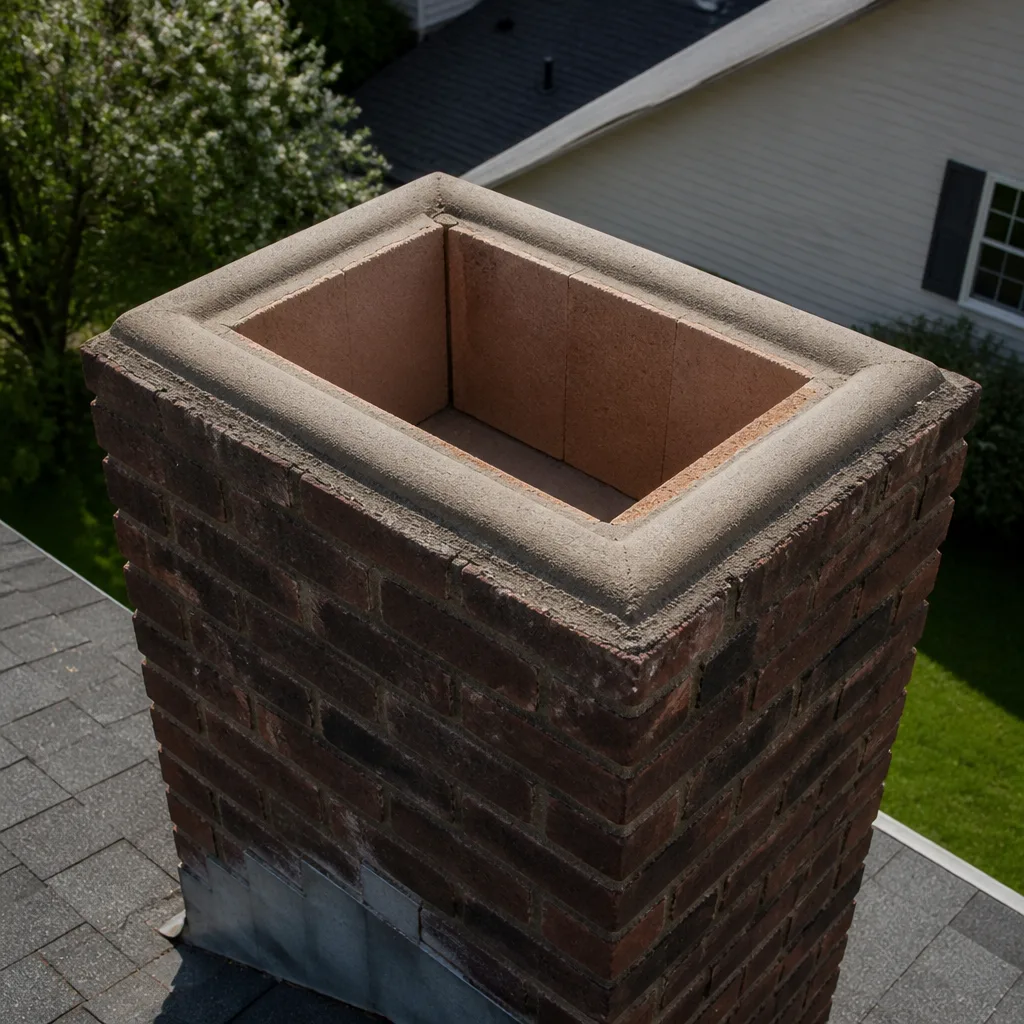 Flue relining
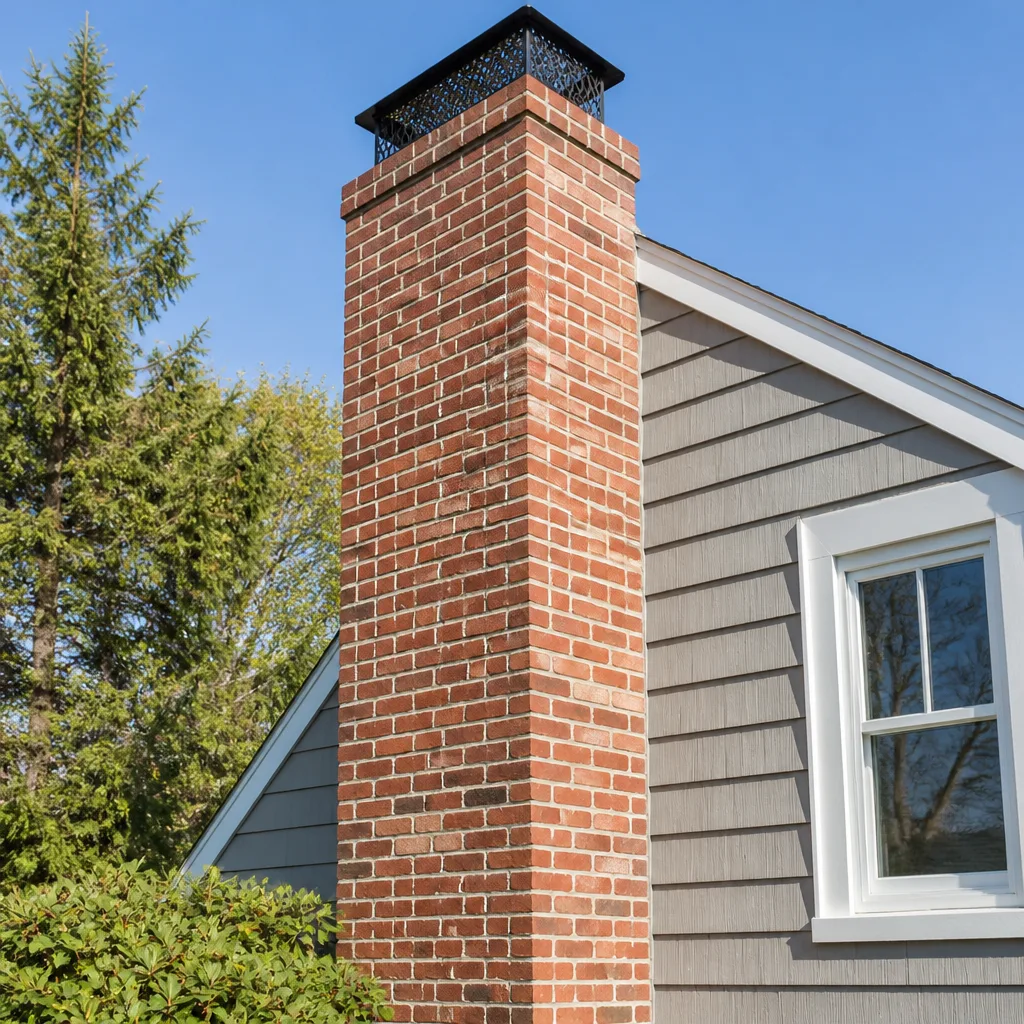 Masonry repair
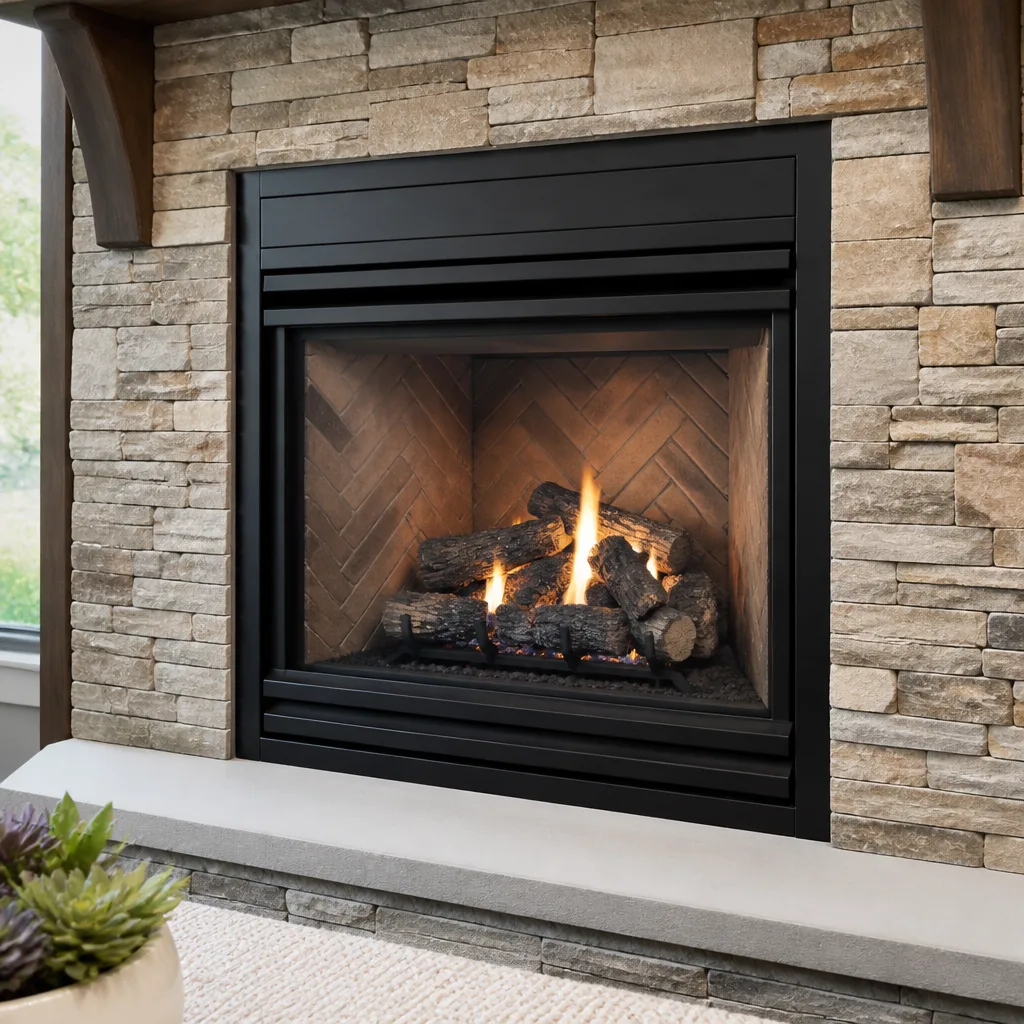 Gas fireplace service
Level 1 sweep and inspection to the NFPA 211 annual standard - flue, crown, cap, and flashing checked and photographed
Chimney sweep logs do not sweep chimneys. They loosen some creosote - which then falls where a brush and vacuum still have to collect it.
Chimney Sweep Troubleshooting in Lafayette: Common Problems and How to Fix Them
A smoky living room isn’t a fireplace problem. It’s almost always a pressure problem. That one distinction matters more than any other when you’re trying to figure out why your chimney is misbehaving, because it stops you from replacing hardware that was never broken. Homeowners in Lafayette call us convinced their flue is clogged when the real culprit is a tightly sealed house fighting the chimney for air. Others assume a cracked firebox brick means a full rebuild, when the masonry is fine and the cap has simply gone missing. This guide walks through the logic behind the most common chimney problems we see in Lafayette, how to tell one from another, and how to describe what’s happening in precise terms so the diagnosis is faster and the fix is right the first time.
Quick Answer
Most chimney problems in Lafayette trace back to a handful of mechanical causes: negative air pressure from tight home construction, a blocked or undersized flue, missing or damaged caps and crowns letting water in, or creosote buildup restricting flow. Draft problems, clearance problems, and water problems each have a different fix, so the first step is identifying which one you’re dealing with. A professional inspection with a camera confirms the cause before any repair is recommended.
Styles & brands we work with
- Sweep & inspection
- Caps & crowns
- Flue relining
- Masonry repair
- Gas fireplace service
Table of Contents
- Draft Problems vs. Clearance Problems: Why the Fix Is Completely Different
- Negative Air Pressure and Backdraft in Lafayette’s Newer Homes
- What 5,236 Feet of Altitude Does to Your Chimney’s Draw
- Odd Smells, Smoke Stains, and Which Symptoms Mean Stop
- How to Describe Your Chimney Problem So It Gets Diagnosed Right
- Water Intrusion, Caps, and Crowns: The Slow Damage Most Homeowners Miss
- Creosote, Glaze, and Why Sweeping Frequency Isn’t One-Size-Fits-All
- What to Expect at Your Next Sweep and Inspection
Draft Problems vs. Clearance Problems: Why the Fix Is Completely Different
A draft problem means the chimney isn’t pulling air up and out the way it should. A clearance problem means combustible material is too close to the chimney or flue and could overheat. These are not the same issue, and confusing them sends homeowners down the wrong repair path entirely. Draft problems get solved by addressing airflow, pressure, or blockage. Clearance problems get solved by changing materials, shielding, or the physical relationship between the chimney and the structure around it. One is about performance. The other is about fire safety.
Here’s how to tell them apart before anyone touches a tool:
- Draft symptoms: smoke rolling into the room, a fire that’s hard to start, a weak or lazy flame, soot on the firebox glass, a fireplace that works on some days and not others.
- Clearance symptoms: discolored or charred wood near the chimney chase, heat you can feel on a wall or mantel, a chimney that passes through combustible framing without proper clearance, or a flue that’s been retrofitted without checking clearances.
Clearance problems are the ones that don’t announce themselves until they’ve done damage. If you’ve got visible discoloration or scorching anywhere near the chimney, stop using the fireplace and get an inspection. Draft problems are usually less urgent but more annoying, and they respond well to diagnosis once the cause is isolated.
In our experience, the majority of Lafayette homeowners who call about smoke coming into the room are dealing with a draft issue, not a clearance failure. But the only way to know which side of that line you’re on is a proper inspection, including a look at the clearances around the chimney chase and where it passes through the roof and floors. We handle that inspection and the resulting repair with the same team, which matters because an inspector who doesn’t do repairs has no stake in getting the diagnosis exactly right.
Negative Air Pressure and Backdraft in Lafayette’s Newer Homes
Modern homes are built tight. That’s good for your heating bill and bad for your chimney. When a house is sealed up with weatherstripping, spray foam, and high-efficiency windows, it doesn’t leak air the way older homes did. Every appliance that exhausts air to the outside, including your clothes dryer, bath fans, kitchen hood, and furnace, is pulling air out of the house. Something has to replace it. If the house has nowhere to draw fresh air from, the chimney becomes a straw and the house pulls air down the flue instead of pushing it up. That’s backdraft.
This is why a chimney that worked fine for years suddenly starts smoking after a remodel, a window replacement, or new insulation. The chimney didn’t change. The house got tighter, and now it’s fighting the flue for every cubic foot of air.
The warning signs of negative pressure:
- Smoke spills into the room when you first light a fire, then settles once the fire is burning hot.
- The problem is worse on windy days or when the bath fan or kitchen hood is running.
- You can feel air being pulled down the chimney when the fireplace is cold.
- A candle flame placed near the open firebox gets drawn toward the room, not up the flue.
None of that is a blocked flue. If you call a sweep and describe it as “a blocked chimney,” you may get a cleaning that doesn’t solve anything, because the flue may already be clean. What you need is an airflow diagnosis: is the flue clear, is the cap free of debris, and does the house need a source of makeup air or a pressure adjustment? Sometimes the answer is as simple as cracking a window near the fireplace while you light the fire. Other times the fix involves the cap, the flue liner, or how the house is ventilated. Understanding which lever to pull is where a specialist earns their keep, and it’s why we treat troubleshooting as a system-level diagnosis rather than a one-note cleaning.
What 5,236 Feet of Altitude Does to Your Chimney’s Draw
Lafayette sits at about 5,236 feet. That altitude changes combustion in ways homeowners coming from lower elevations notice right away. Air is thinner up here, which means there’s less oxygen in every cubic foot the fire pulls in, and less density for the chimney to push against as it exhausts. Both of those affect how your fireplace behaves. A fire that burned hot and clean at sea level can feel sluggish and lazy in Lafayette until you adjust how you burn it.
What that means in practical troubleshooting terms:
- Fire in the firebox, not roaring. A weak, floppy flame at altitude often signals a combustion air shortage, not a wet log. Try smaller pieces of well-seasoned wood stacked loosely, and see if the draw improves before assuming the chimney’s at fault.
- Smoke lingering at the top of the firebox. At altitude, the initial draw is weaker, so a fire takes longer to establish a healthy draft. Give it time with small, dry kindling rather than stuffing the box full of logs and waiting.
- Gas fireplaces too. Gas fireplace burners are affected by altitude as well. If your gas fireplace flame looks yellow, tall, or sooty, that’s worth a service visit, not a DIY adjustment.
Altitude doesn’t cause chimney problems on its own, but it makes every other problem more obvious. A flue that’s slightly restricted, a cap that’s slightly too restrictive, or a house that’s slightly too tight all show up faster at 5,236 feet than they would at 500. When we troubleshoot a Lafayette chimney, we work from the assumption that altitude is a constant here, and we solve for the variables around it.
Odd Smells, Smoke Stains, and Which Symptoms Mean Stop
Some chimney symptoms are annoying. Some are a signal to stop using the fireplace immediately. Knowing which is which is the single most useful troubleshooting skill a homeowner can develop. The smell of creosote after a fire is out, and visible smoke staining above the firebox, are both in the “stop and get an inspection” category. A little bit of soot on the glass of a gas fireplace is not.
Symptoms that mean shut the fireplace down and call:
- A strong creosote smell in the house after the fire is out. That smell suggests the flue is loaded with unburned fuel deposits, which are the fuel for a chimney fire. Stop using it until a sweep inspects.
- Visible smoke staining above the firebox or on the face of the masonry. Staining means smoke has been escaping from the firebox into the room at some point, which means the draft or the box itself has a problem.
- Discolored or charred wood near the chimney chase. This is a clearance symptom, and it needs immediate attention.
- A roaring sound with dense smoke or a hot smell coming from the flue. Get everyone out and call the fire department.
- Headache, dizziness, or nausea when the fireplace or furnace is running. Treat carbon monoxide as a real possibility. Leave, ventilate, and call for service.
Symptoms that can wait for a scheduled visit:
- Occasional smoke spill on startup but an otherwise healthy burn.
- A sooty smell that shows up only when the fireplace is cold.
- A slow-drawing chimney that still exhausts but doesn’t feel powerful.
- A loose damper handle or a damper that sticks.
- Sooty glass on a gas fireplace.
If you’re unsure which bucket your symptom belongs to, describe it to us in the terms below and we’ll help you decide whether it needs a same-day visit or can be scheduled. We answer 24/7. Fast dispatch from 7am to 7pm, Sunday through Friday.
How to Describe Your Chimney Problem So It Gets Diagnosed Right
The single biggest cause of wasted service calls isn’t a chimney problem at all. It’s a description problem. When a homeowner calls and says “my chimney is blocked,” the sweep shows up expecting a blockage. If the real issue is negative pressure, the sweep may clean a flue that didn’t need cleaning and the problem remains. The fix is to describe what you observe rather than what you’ve concluded. Observations are facts. Conclusions are guesses.
Here’s a way to structure a call that helps any technician, anywhere:
- State what happened and when. “The fireplace started smoking into the room about two weeks ago.” Avoid “the chimney is clogged.”
- Name the conditions. Windy day? Cold outside? Just after the house got new windows? Right after you turned on the bathroom fan? Conditions are diagnostic gold.
- Describe the smoke itself. Does it spill into the room and then stop? Does it roll continuously? Is it gray, white, or black?
- Say what you’ve already checked. “I looked at the cap from the ground and it’s intact,” or “I noticed a stain on the ceiling near the chimney chase.” That saves time.
- Mention anything else running in the house. Dryer, range hood, bath fans, furnace. These are the usual suspects for pressure problems.
One question worth answering for yourself before you call: is the chimney on an exterior wall, or does it run up through the middle of the house? Interior chimneys stay warmer and draft better than exterior ones, especially in a cold Lafayette winter. If you can tell us which you have, we can often narrow the diagnosis before we arrive.
The other benefit of precise description is that it protects you from unnecessary repair recommendations. If you describe a pressure problem and get quoted a full reline, ask what the reline solves. Under camera inspection, you should be able to see what the technician sees. That’s the standard we hold ourselves to: no liner, no repair, no masonry work without photo evidence you can review on the spot.
Water Intrusion, Caps, and Crowns: The Slow Damage Most Homeowners Miss
Water is the quiet destroyer of chimneys. It doesn’t create the dramatic failure a chimney fire does, but over years it rots mortar, cracks flue tiles, rusts dampers, and turns a healthy chimney into a reconstruction project. The most common entry points are the missing cap and the failing crown. A cap is the cover at the top of the flue that keeps rain, snow, birds, and debris out. A crown is the sloping concrete surface that sits at the top of the masonry chase and sheds water. When either is missing or cracked, water gets in on every storm. In Lafayette, that means a lot of freeze-thaw cycles working on wet masonry.
The signs of water intrusion:
- Rust on the damper or the firebox metalwork.
- White, powdery staining on the chimney’s exterior brick (efflorescence from moisture moving through the masonry).
- Crumbling mortar joints on the exterior chimney above the roofline.
- Water stains on the ceiling or the chimney chase face inside the house.
- A musty smell in the fireplace when it hasn’t been used in a while.
A properly fitted cap with a stainless or copper top addresses the root cause. A crowned, sloped top seals the masonry itself. When we install a cap and crown, we use professional-grade components, and we treat the job as prevention rather than a quick patch. Brands like Olympia Chimney and Copperfield give us options that hold up against the snow load and freeze-thaw cycling we get in Lafayette, and a well-chosen cap does its job for a very long time.
If you notice any of those signs, don’t wait for a fire. Water damage compounds. Call (844) 272-3731 for a free estimate; a chimney cap and crown visit often prevents the more expensive chimney repair that comes later.
Creosote, Glaze, and Why Sweeping Frequency Isn’t One-Size-Fits-All
Creosote is the residue left behind when wood burns. It comes in stages, and the difference between the stages is the difference between a routine sweep and a potentially dangerous flue. Light, flaky creosote brushes out easily. Glazed, tar-like creosote is a sign of a hot-burning but under-ventilated fire, and it’s far more stubborn. It’s also the fuel for chimney fires. A flue that’s coated with glazed creosote is a flue that should not be used until it’s cleaned.
How fast creosote builds depends on a stack of variables:
- How you burn: small, hot fires with dry, seasoned wood produce less creosote than long, smoldering fires with wet wood.
- What you burn: properly seasoned hardwood is best. Wet wood, treated lumber, and trash all leave more residue behind.
- How your chimney drafts: a slow-drawing flue leaves more deposits because smoke lingers in the flue longer.
- What kind of appliance you have: a wood insert concentrates heat and can produce more creosote if not run correctly.
The general guidance is that a wood-burning chimney should be swept and inspected annually. Heavy users should consider it more often, especially if the flue is on an exterior wall in a cold climate like Lafayette’s. Gas fireplaces produce less creosote but still need annual service because they can produce soot and their venting needs checking too.
What we do at your chimney sweep visit is straightforward. We brush the flue, run a camera inspection, and show you what we find. If glazed creosote has built up, we can address it as part of the sweep rather than stopping short and handing you a to-do list. If the flue is clean, we tell you that too, and we don’t sell a cleaning you don’t need.
What to Expect at Your Next Sweep and Inspection
A professional sweep and inspection follows a predictable sequence. Knowing what’s coming makes the visit more useful and less stressful, and it lets you watch the work with confidence rather than taking a technician’s word for it. The whole visit usually takes about an hour for a straightforward chimney, longer if repairs are needed.
- Setup. Drop cloths and a high-powered vacuum protect your living room. The vacuum runs throughout the job to capture the dust that brushing generates.
- Exterior check. Before cleaning, we look at the cap, crown, flashing, and masonry from the roof or the ground, whichever is safe and appropriate. Anything obviously damaged gets photographed and flagged.
- Flue sweep. We brush the flue from the top or the bottom depending on the chimney’s design, then vacuum any debris released by the brush.
- Camera inspection. A camera run down the flue shows the condition of the liner, joints, and any offsets. Photos go into your report.
- Firebox and damper check. We check the firebox, damper, smoke shelf, and the metal or masonry around the opening.
- Report and pricing. You see the photos, we describe what we found, and if a repair is needed, we give you a written estimate on the spot.
For most homeowners, the answer after a sweep is “your chimney is in good shape, we’ll see you next year.” For some, the answer is a repair or a fireplace repair, and that’s where the brand relationships matter. We use professional-grade liner systems from DuraFlex and restoration products like HeatShield so that flue damage doesn’t automatically mean a full reline. HeatShield resurfacing can restore a damaged flue liner from the inside and add years to the chimney’s life without the cost of a full reline in many cases. We specify it, we apply it, and it’s the kind of option that isn’t available from every sweep. The goal of the visit is always to fix what’s actually broken and to tell you honestly when something can safely wait.
Common Mistakes to Avoid
- Assuming a smoky room means a blocked flue. In a tight modern Lafayette home, it usually means negative pressure. Clean the flue if it needs it, but solve the pressure problem too, or the smoke comes right back.
- Burning wet or unseasoned wood to save money. Wet wood produces more creosote and less heat, which is the opposite of what you want. The residue it leaves behind costs more than the savings on the firewood.
- Skipping the annual sweep because “it doesn’t look dirty.” Creosote builds up inside the flue where you can’t see it. The exterior looking clean says nothing about the interior.
- Running a fire in a chimney with no cap. A missing cap lets in rain, snow, birds, and debris. It’s the cheapest major repair on a chimney and one of the most important.
- Using a chimney sweep who doesn’t also do repairs. Split accountability between an inspector and a repair contractor leaves room for finger-pointing. One team, one diagnosis, one fix is the standard we hold ourselves to.
- Assuming a gas fireplace is maintenance-free. Gas fireplaces still need annual service to check venting and clean soot. They’re just as capable of a carbon monoxide problem as a wood-burning unit.
- Ignoring water staining on the exterior brick. White staining and crumbling mortar are early signs of water working through the masonry. Catching it early is a cheap fix; catching it late is a rebuild.
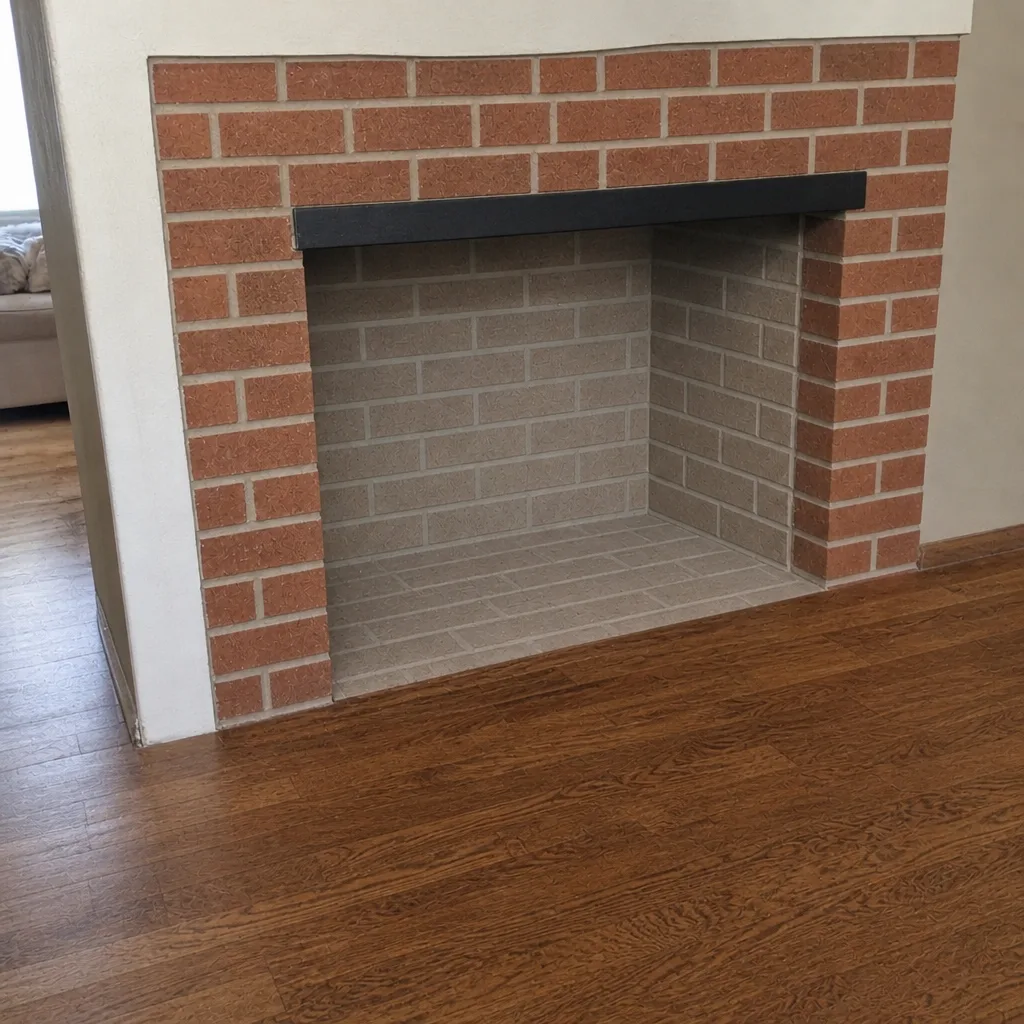
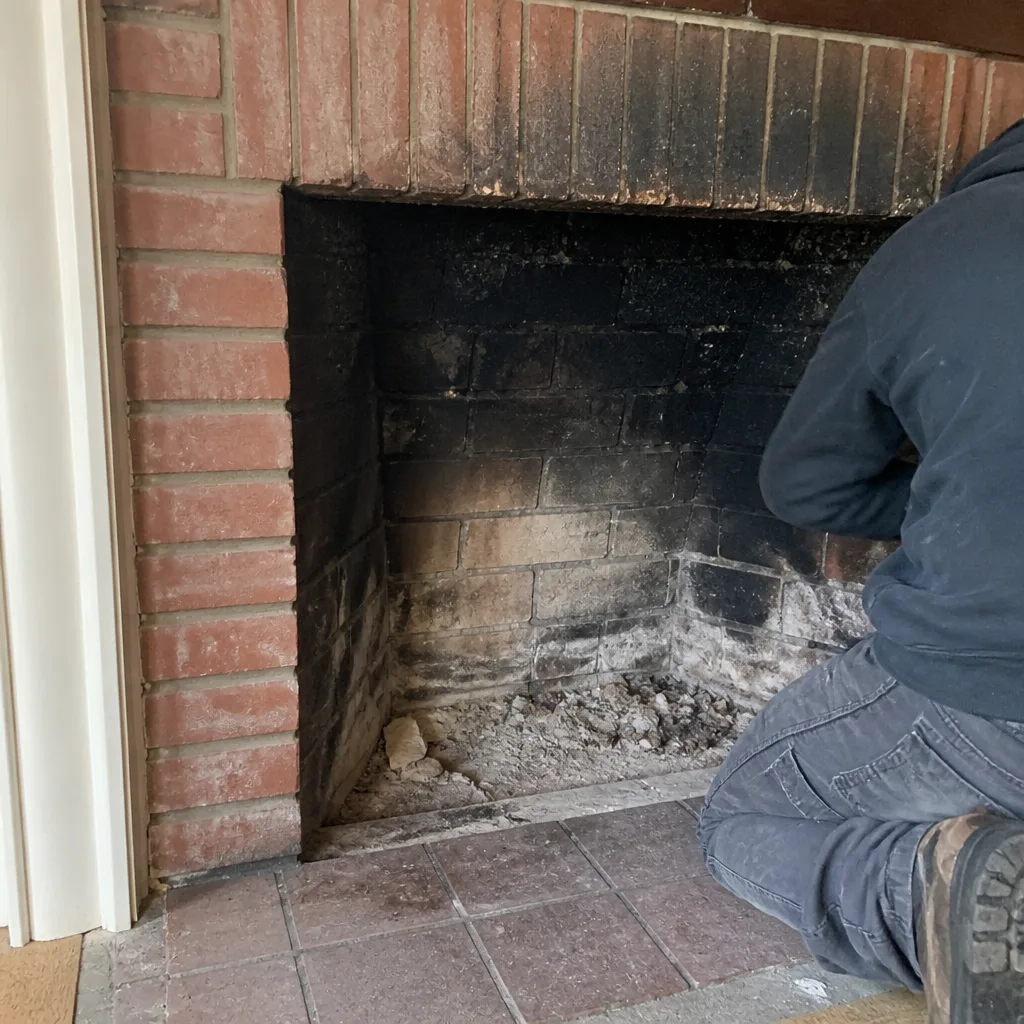
See the difference
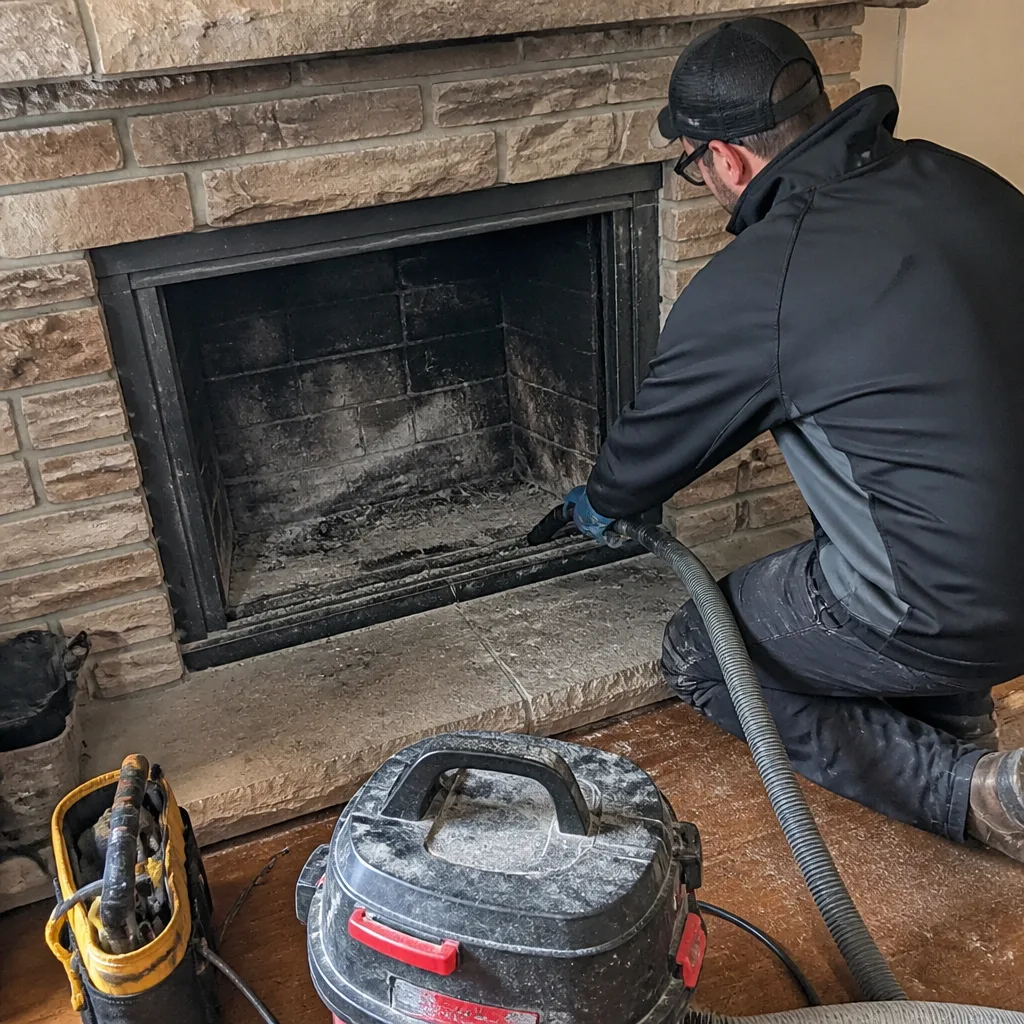 Before
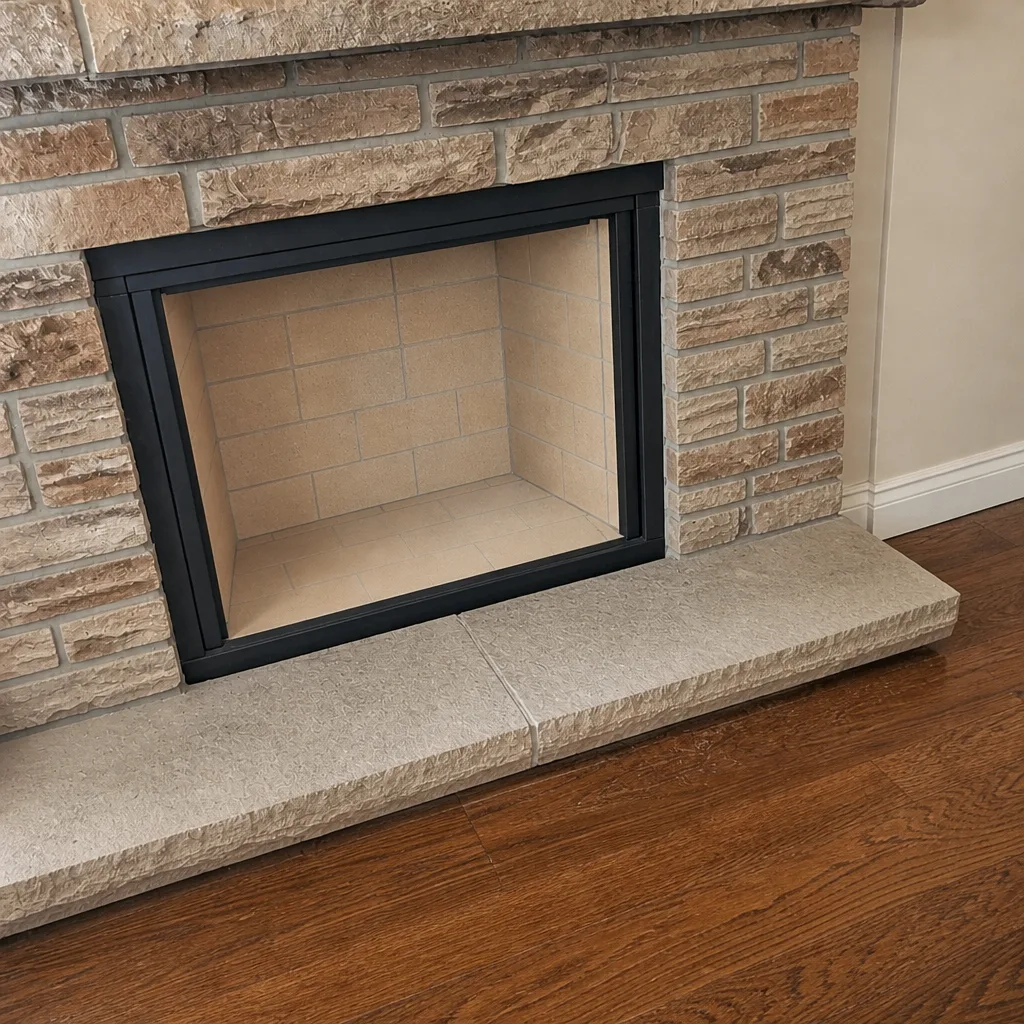 After
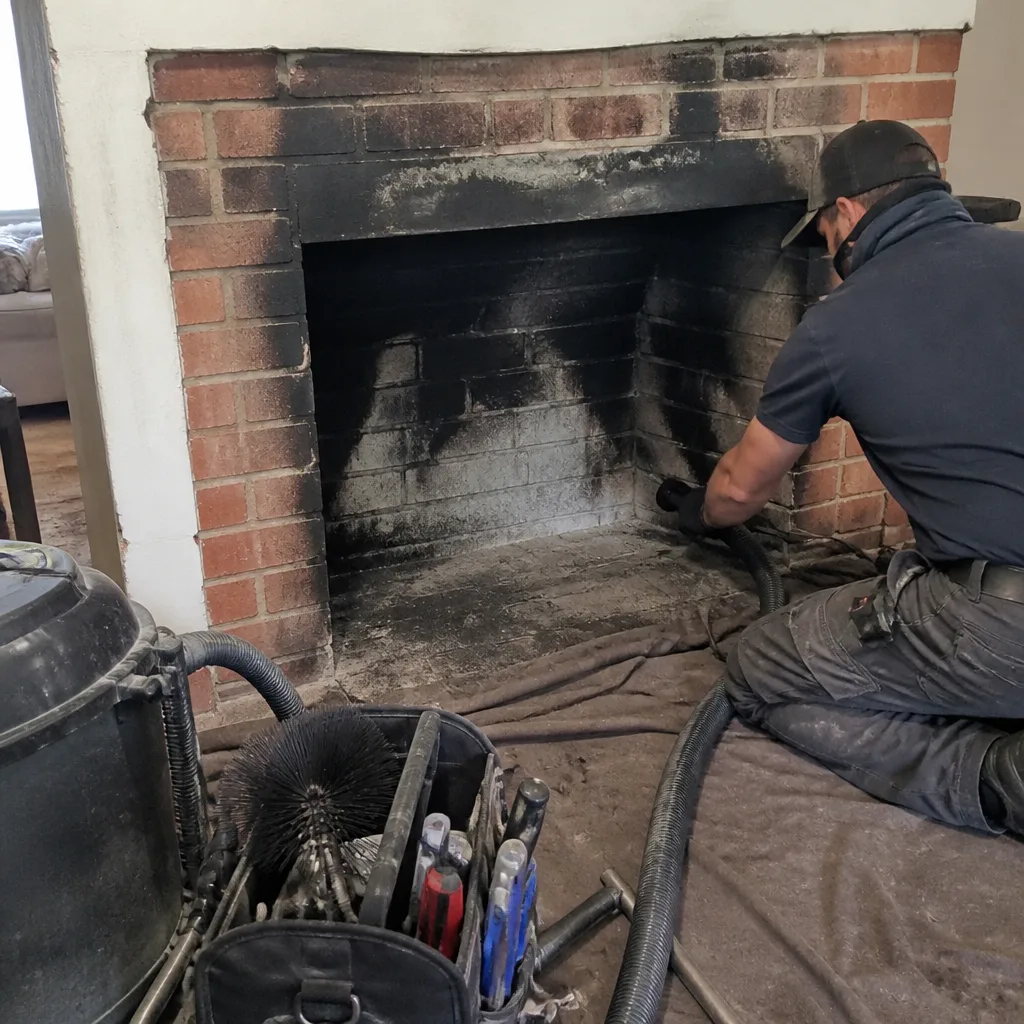 Before
 After
 Before
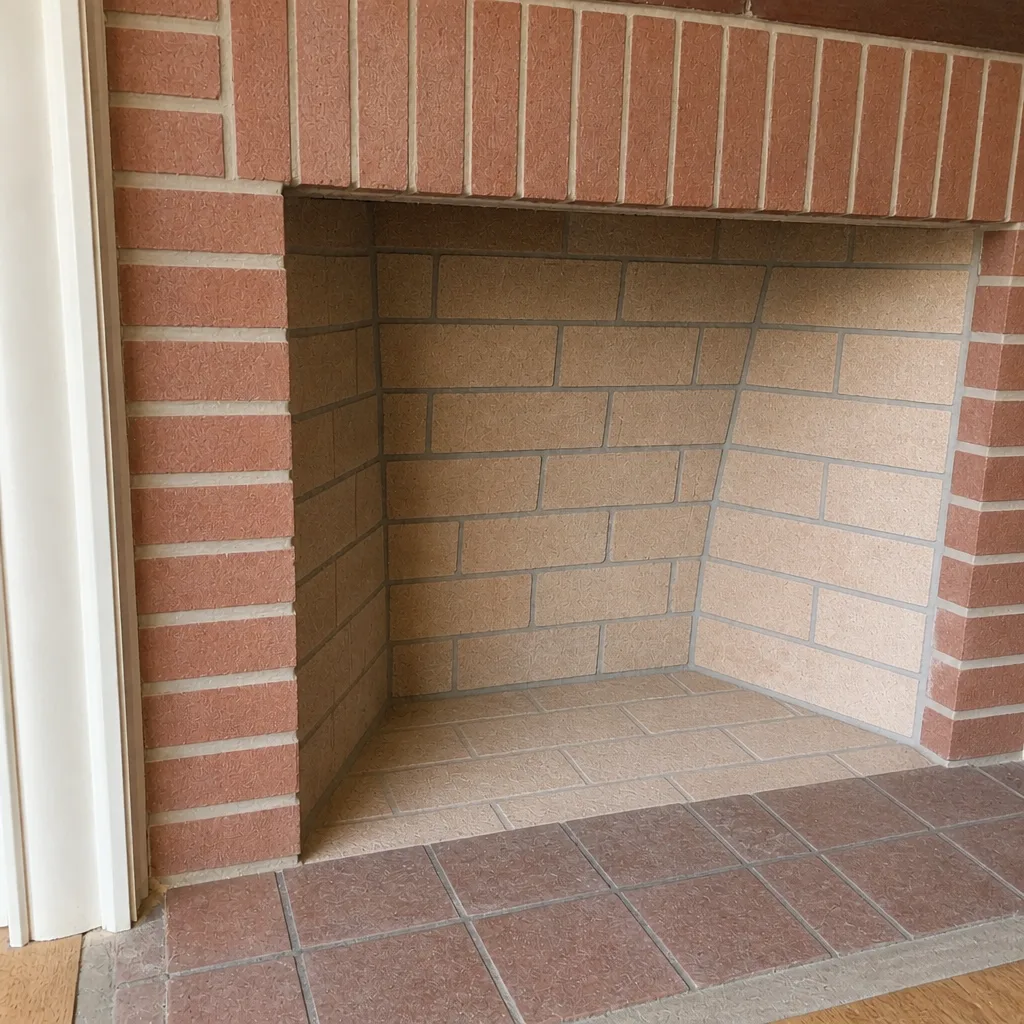 After
When to Call a Professional
Call a professional the moment you see or smell something that suggests the chimney isn’t behaving the way it should. Specifically: creosote smell in the house after a fire is out, visible smoke staining above the firebox, discolored wood near the chimney chase, a roaring sound with dense smoke, or headache and dizziness when the fireplace or furnace is running. Each of those needs a same-day visit, not a wait-and-see. Call for a scheduled sweep and inspection if you haven’t had one in the past year, if you’ve moved into a home with an unknown chimney history, or if a slow draw is annoying but not dangerous. If you’ve just had a remodel or new windows and the fireplace started acting up, that’s worth a call too. Lafayette Chimney Sweep offers free estimates in Lafayette. Call (844) 272-3731. Our technicians have up to 10 years of experience, and they’ve seen nearly every version of these problems that a Colorado chimney can present. We answer 24/7. Fast dispatch from 7am to 7pm, Sunday through Friday.
Frequently Asked Questions
A typical chimney sweep in Lafayette runs in a range that depends on the flue’s condition and what the inspection finds, and the written estimate sets the final price. A standard sweep and inspection is one price, and anything beyond that, like a liner issue or a fireplace repair, is priced separately after the camera inspection. Call (844) 272-3731 for an exact quote; estimates are free.
Not always. A damaged flue can sometimes be restored instead of relined, and HeatShield resurfacing is one option that often saves homeowners the cost of a full reline. The right call depends on the extent of the damage, which is why we don’t recommend a liner without showing you the camera footage. Call (844) 272-3731 for an exact quote; estimates are free.
Once a year for a wood-burning chimney, and heavy users should consider a yearly inspection even when the flue looks clean from the outside. Gas fireplaces also need annual service because soot and venting issues don’t announce themselves. If you burn wet wood or your flue is on an exterior wall, more frequent sweeps are worth discussing. Call (844) 272-3731 for an exact quote; estimates are free.
Creosote builds up in the flue, and at a certain point it becomes fuel for a chimney fire. The other risks are carbon monoxide backing up into the house if the flue is blocked or the venting is compromised, and water damage if the cap or crown has failed unnoticed. None of those announce themselves early. Call (844) 272-3731 for an exact quote; estimates are free.
Probably not. Intermittent smoke is a classic sign of a pressure problem, especially in a newer, tightly sealed Lafayette home. It often gets worse on windy days or when an exhaust fan is running. A quick inspection confirms whether the flue is clear, and then we look at the house’s air balance. Call (844) 272-3731 for an exact quote; estimates are free.
Yes, but not in a way that changes the fix. At 5,236 feet, there’s less oxygen per cubic foot and less air density, so fires start slower and draw weaker than at low elevation. That makes existing flue or pressure problems more visible, and it means you should give a cold fire small dry kindling and time to establish a draft before concluding the chimney is at fault. Call (844) 272-3731 for an exact quote; estimates are free.
The Bottom Line
Most chimney problems in Lafayette follow a predictable logic: they’re draft problems, clearance problems, water problems, or creosote problems, and each has a distinct fix. Backdraft from negative pressure in tight homes is far more common than a truly blocked flue, and altitude at 5,236 feet makes every other issue more obvious. Describe what you see, not what you’ve concluded. Get a camera inspection before agreeing to any repair. And keep the cap and crown in good repair, because water damage compounds faster than most homeowners expect. A clean chimney is safe; a capped, crowned chimney stays that way. If you’re troubleshooting something right now, we’re the team that sweeps, inspects, and repairs, so the diagnosis and the fix come from the same specialists. For the full picture of what we do across the entire chimney system, see Lafayette Chimney Sweep.
Call (844) 272-3731 for a free estimate. We answer 24/7. Fast dispatch from 7am to 7pm, Sunday through Friday.
Written by the team at Lafayette Chimney Sweep.