
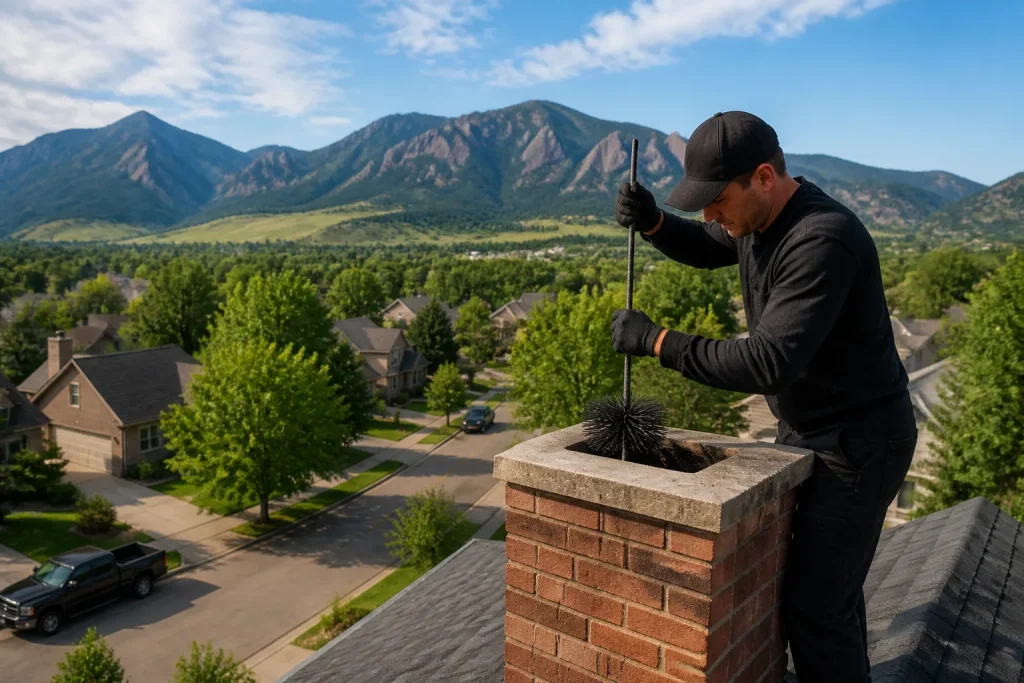
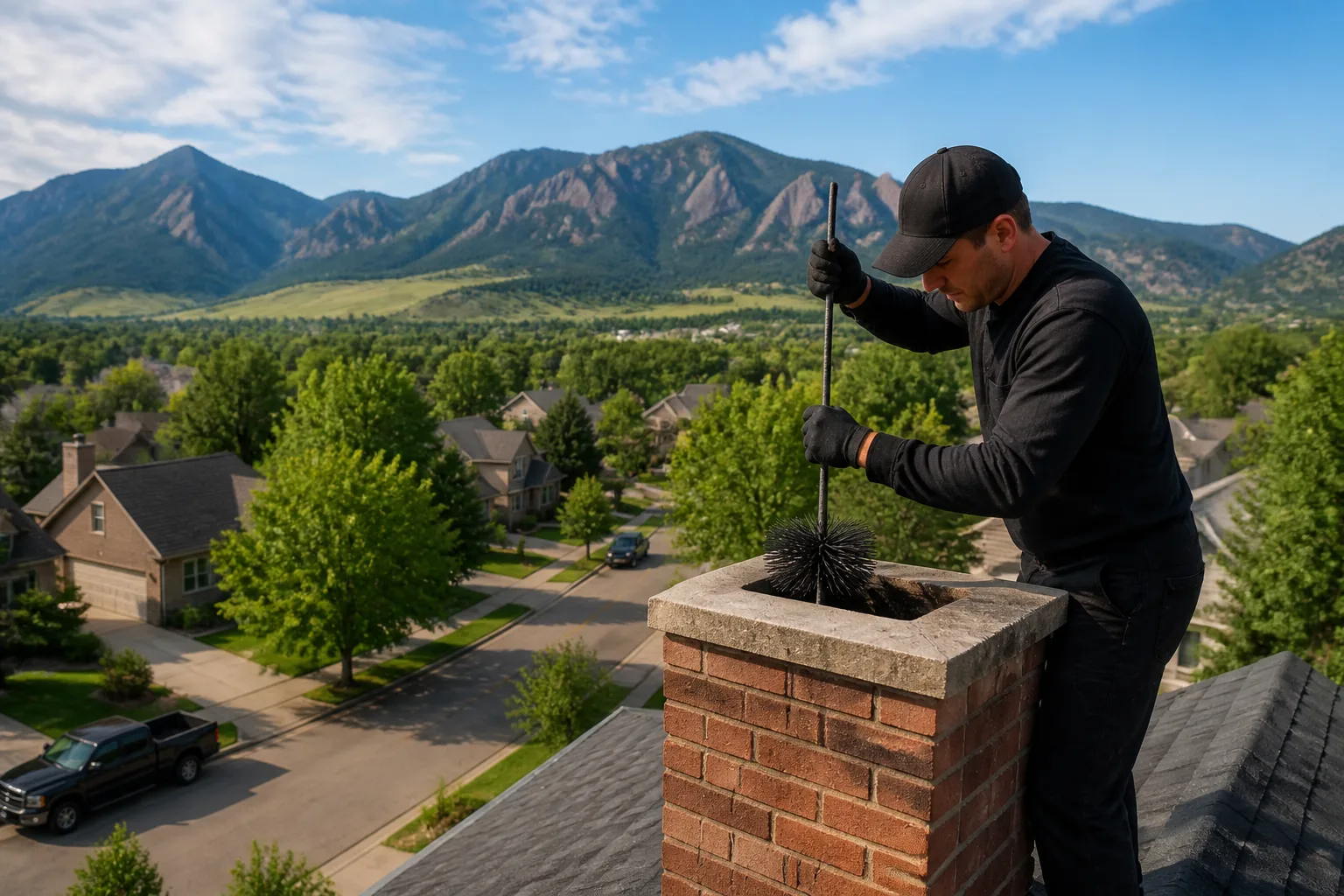
DuraFlex Chimney Sweep in Lafayette: A Homeowner’s Guide
There are three different DuraFlex alloy grades, and the cheapest one is not rated for wood-burning appliances. Most homeowners never know which one was installed in their home. They find out years later, when a liner fails early or a warranty claim gets denied because the spec was wrong from day one. If you’d rather not sort through alloy grades and UL listings on your own, call (844) 272-3731 and we’ll walk you through what your chimney actually needs.
This guide is about the questions to ask before a liner goes in, not after. A flexible stainless liner is one of the best things you can do for an older chimney in Lafayette, but only when it’s specified correctly. Get the details right and you have a system that lasts decades. Get them wrong and you’ve paid for a problem that’s harder to see than the one you started with.
What Are the Three DuraFlex Alloy Grades, and Which One Do You Actually Need?
DuraFlex liners come in three alloy families: a standard 304-grade stainless, 316Ti (titanium-stabilized), and 904L. For a wood-burning appliance, 316Ti or 904L is the correct specification. Standard 304 is not rated for wood-burning service. That single fact resolves most of the confusion homeowners bring to us.
The reason comes down to what wood smoke does to metal. Burning wood produces creosote and acidic condensate. 316Ti handles that environment well and is the workhorse grade for wood-burning fireplace inserts and stoves. 904L is the higher tier, chosen when conditions are more aggressive, such as certain oil applications or unusually corrosive flue environments. Standard 304 is suited to other fuel types, not to a firebox full of oak and pine.
Why does this matter to your wallet? Two reasons:
- Warranty validity. A liner installed outside its rated application can void the manufacturer’s warranty. If the liner fails in year six, the warranty paperwork is the first thing anyone checks, and the wrong grade ends the conversation.
- Premature failure. A liner that isn’t rated for wood-burning service can corrode from the inside out. You won’t see it, because it’s hidden behind masonry. You’ll notice it when performance drops or an inspection finds it.
So ask the question directly: “Which alloy grade are you specifying, and is it rated for wood?” A straight answer with a model number attached is what you want to hear. Vague reassurances are not.
Why Flexible Liner Suits Lafayette’s Older Housing Stock
Lafayette has a mix of housing ages, and the masonry chimneys in the older homes were built for open fireplaces, not for modern inserts. That mismatch is the core reason flexible liner is such a good fit here.
Original masonry flues are rarely square. They’re built from brick and mortar, and over decades the interior dimensions shift, offset, and taper. They were also sized for an open hearth with a wide, inefficient draw, not for the tighter, higher-BTU output of a modern insert or stove. Drop a rigid liner into a flue that isn’t straight and it doesn’t go. A flexible stainless liner follows the flue’s actual shape, which is why it’s the practical answer for a chimney that was never designed to be relined.
There’s an efficiency dimension too. Modern wood inserts produce far more heat per firebox than the open fireplace the flue was built around, and the flue needs to be sized to match. A flexible liner lets us match the flue to the appliance rather than forcing the appliance to live with an oversized flue. That’s the difference between a chimney that drafts reliably and one that smokes into the room on a cold start.
If you’re in Lafayette and unsure what your flue looks like inside, that’s where an inspection comes first. A camera view tells you the true dimensions and condition before anyone commits to a liner.
How Does Liner Diameter Affect Your Fireplace’s Efficiency?
Liner diameter is the most under-discussed part of a reline, and it has a direct effect on how your appliance burns. Size it too large and you lower the temperature of the exhaust gas moving up the flue. Lower stack temperature means slower, incomplete combustion and more creosote condensing on the liner walls, including the glazed, hard-to-remove type that builds up fast.
Size it too small and you choke the appliance. Draft suffers, the fire struggles, and smoke can back into the room. The correct diameter is a calculation, not a guess:
- Start with the appliance. The manufacturer specifies a required flue size for each insert or stove model. That’s the first number in the equation.
- Measure the actual flue. The masonry opening, its height, and its offsets all constrain what will physically fit and draw correctly.
- Match the two. The liner diameter has to satisfy the appliance’s requirement while still fitting the flue and providing adequate draft for the chimney’s height.
This is why a liner “sized by eye” is a red flag. A good installer can tell you why they chose the diameter they chose, in terms of your appliance and your flue. If the answer is “this is the size we always use,” ask again.
What a Correct DuraFlex Termination Looks Like at the Crown
The top of the installation matters as much as the liner itself. A liner that’s beautifully run through the flue but sloppily terminated at the crown is a job that will let you down. Here’s what a correct termination includes:
- A proper top plate. The plate seals the space between the liner and the crown, closing off the flue opening so water and debris can’t get in around the liner. It also anchors the top of the system.
- A mechanical connection. The liner is secured to the top plate and the appliance collar at the bottom, not left to hang loose. Movement at either end is how liners fail.
- A correct rain cap. The cap keeps water, birds, and debris out while allowing exhaust to escape freely. The cap spec should match the liner diameter and the appliance’s needs.
Notice that the liner is one part of a system. The top plate, cap, and connection points are what keep the whole thing working. That’s why we treat cap and crown work as part of the same visit rather than a separate afterthought. A clean chimney is a safe chimney, and a capped, crowned chimney stays that way. When we look at a Lafayette chimney, we’re looking at the whole assembly from firebox to crown, not just the pipe in the middle.
How Do You Verify the Liner Spec After Installation?
A reputable installer hands over documentation. You shouldn’t have to take anyone’s word for what went into your chimney. Ask for these before the job is closed out:
- The UL 1777 listing certificate. This is the listing that covers chimney liners. The certificate should match the product installed and the application it’s rated for.
- The material and model documentation. Paperwork naming the alloy grade (316Ti or 904L, for example) and the product line. This ties the physical liner to its rating.
- Photos of the installation. Before-and-after camera images of the flue, plus shots of the termination at the crown. You should be able to see what was done.
Keep all of it. If you ever sell the home, that documentation is a real asset, and if a warranty issue ever comes up, it’s the file that resolves it. This is also where a single specialist team pays off. When the same people who inspect your chimney also do the repair, there’s no gap between “here’s what we found” and “here’s what we installed.” An inspection means nothing if the inspector isn’t the one standing behind the repair.
When to Call a Pro
Some chimney work is a genuine safety line, and liner specification is one of them. High heat, carbon monoxide, and a hidden flue are not a combination to learn on. If your chimney needs a liner, a sweep, or a repair, that’s work for trained professionals, and we’re glad to take a look. We can also help with chimney repair and fireplace repair when the issue turns out to be at the firebox rather than the flue.
The Bottom Line
DuraFlex liner is a material with a specific engineering profile, and it’s not interchangeable with every flexible liner on the shelf. The alloy grade has to be rated for wood, the diameter has to match your appliance and your flue, and the termination at the crown has to be built to last as long as the liner. Ask which grade, ask why that diameter, and ask for the UL 1777 paperwork when it’s done. Our technicians have up to 10 years of experience, and we work with the same professional-grade materials the industry relies on, including DuraFlex and HeatShield. If you’re in Lafayette and need help, Lafayette Chimney Sweep offers free estimates. Call (844) 272-3731. We answer 24/7, with fast dispatch from 7am to 7pm, Sunday through Friday.
Frequently Asked Questions
316Ti and 904L are the grades rated for wood-burning service. Standard 304 is not rated for wood-burning appliances and can void the warranty if installed in that application. When you get an estimate, ask for the specific alloy grade in writing. Call (844) 272-3731 if you’d like us to check what’s in your chimney.
Sometimes it can be restored. HeatShield liner resurfacing can extend the life of a damaged flue at a fraction of full relining cost in the right conditions. Whether restoration is appropriate depends on the condition of the flue, and that’s determined by a camera inspection. We won’t recommend replacement if restoration will do the job, and we’ll show you what we found. Call (844) 272-3731 to schedule an inspection.
A correctly specified and installed liner is designed for long service, but the rating depends on the alloy grade and the application it’s matched to. The spec matters more than any single lifespan figure. A liner installed outside its rated use can fail well before its rated life. That’s why the grade and the UL 1777 listing are worth verifying up front. Call (844) 272-3731 for an exact quote, and estimates are free.
You should receive the UL 1777 listing certificate, product documentation naming the alloy grade and model, and photos of the flue and crown termination. Keep all of it. It proves the spec and protects any warranty claim down the road. If an installer can’t produce that paperwork, that’s a reason to ask questions before the job is finished. Call (844) 272-3731 with any questions about what your installation should include.
Related services in Lafayette: if your project includes a routine cleaning or inspection, our chimney sweep visit covers the full system, and you can start with the Lafayette Chimney Sweep team for anything else on your chimney.
Written by the team at Lafayette Chimney Sweep.
Need Chimney Cleaning Help?
Call Lafayette Chimney Sweep - the local pro we connect you with is licensed and insured, here with fast help in Lafayette.
(844) 272-3731